

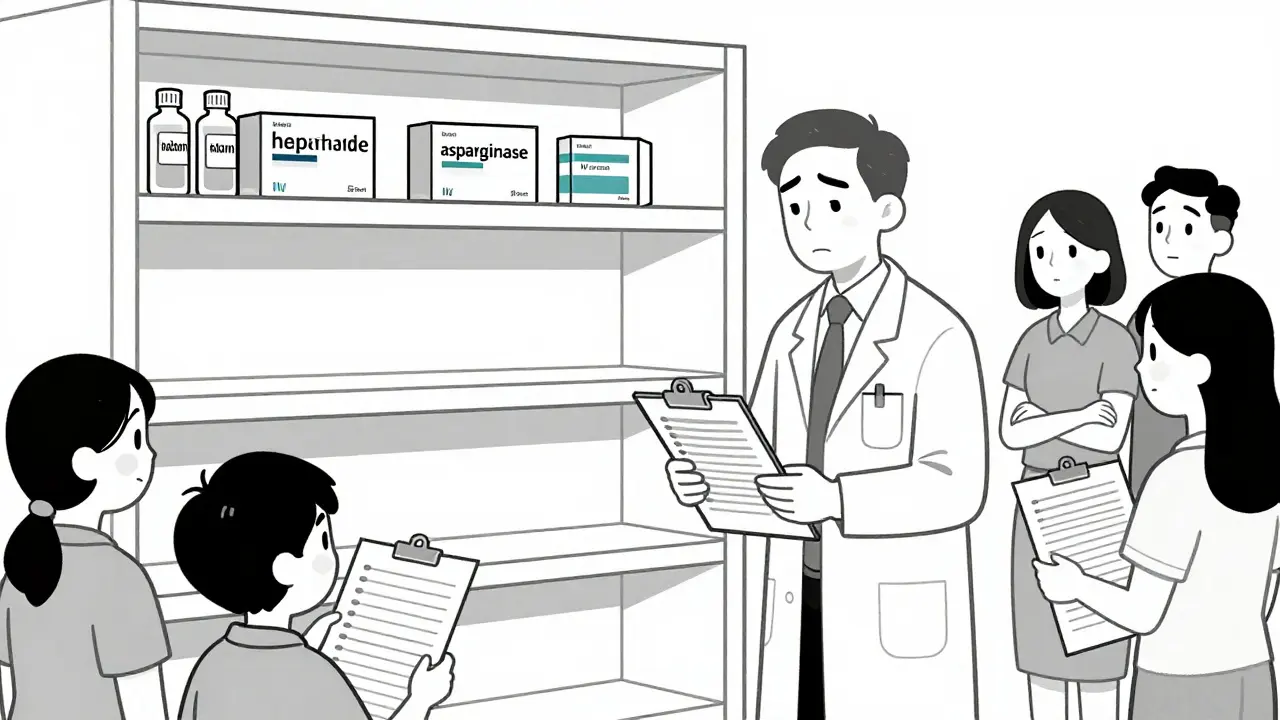
When a life-saving drug disappears from the pharmacy shelf, it's not just an inventory problem-it's a crisis that ripples through hospitals, clinics, and homes. In 2025, over 250 drugs remained in shortage across the U.S., including critical medications like heparin, asparaginase, and IV saline. For patients with cancer, heart disease, or severe infections, this isn't a footnote in a report-it's a matter of life or death.
What Happens When a Drug Vanishes?
Imagine you're a parent whose child needs asparaginase to treat acute lymphoblastic leukemia. The drug is on backorder. The hospital has no stock. The next available dose is weeks away. During those weeks, cancer cells multiply. Treatment delays of 7 to 14 days are common during shortages, and studies show they directly reduce survival rates. This isn't hypothetical. It's happening right now in hospitals across the country. Or consider a diabetic patient who relies on insulin and can't afford the alternative brand that costs 30% more. Or a senior with heart failure who needs dobutamine for a critical infusion-but the hospital has to delay the procedure because the IV bag supply is exhausted. These aren't rare edge cases. They're routine occurrences. According to the American Society of Health-System Pharmacists (ASHP), 72% of all shortages that started in 2022 or later are still active. That means patients are living with this uncertainty for years, not months.Who Gets Hit Hardest?
Children. Elderly patients. People with chronic illnesses. These are the groups most affected. Pediatric hospitals monitor 25% more shortages than general hospitals because kids need specialized dosages and formulations that no one else produces. A shortage of lorazepam injection doesn't just mean sedation delays-it means a child having a seizure can't be treated in time. Oncology drugs are among the most vulnerable. A 2024 Vizient survey found that 24-42% of all drug shortages involve cancer medications. When nelarabine disappears, teens with T-cell leukemia have no backup. No equivalent. No substitute. Just waiting. Even common medications like antibiotics and anesthesia agents are in short supply. In one hospital, a shortage of propofol forced anesthesiologists to use older, less reliable drugs. Procedure times increased by 15%. Patient recovery became less predictable. Staff had to work extra hours to manage the chaos.The Hidden Costs: More Than Just Money
The financial toll is staggering. Hospitals spent nearly $900 million in 2023 just on overtime, emergency purchases, and staff training caused by drug shortages. But the real cost isn't on the balance sheet-it's in patient outcomes. Medication errors jumped 43% between 2019 and 2024 because of shortages. When a nurse switches from one drug to an unfamiliar alternative, mistakes happen. A wrong dose. A missed interaction. A delayed response. The National Institutes of Health found that 31% of hospitals reported adverse events directly tied to shortages. That’s not just a statistic. That’s a person who had a stroke because the anticoagulant they needed wasn’t available. Patients are skipping doses, cutting pills in half, or not filling prescriptions at all. A 2024 JAMA Network Open study found that patients are going without treatment because they can’t afford alternatives or can’t get them at all. One in three Americans admit they’ve skipped medication due to cost or availability. That’s 1.1 million Medicare patients at risk of preventable death over the next decade.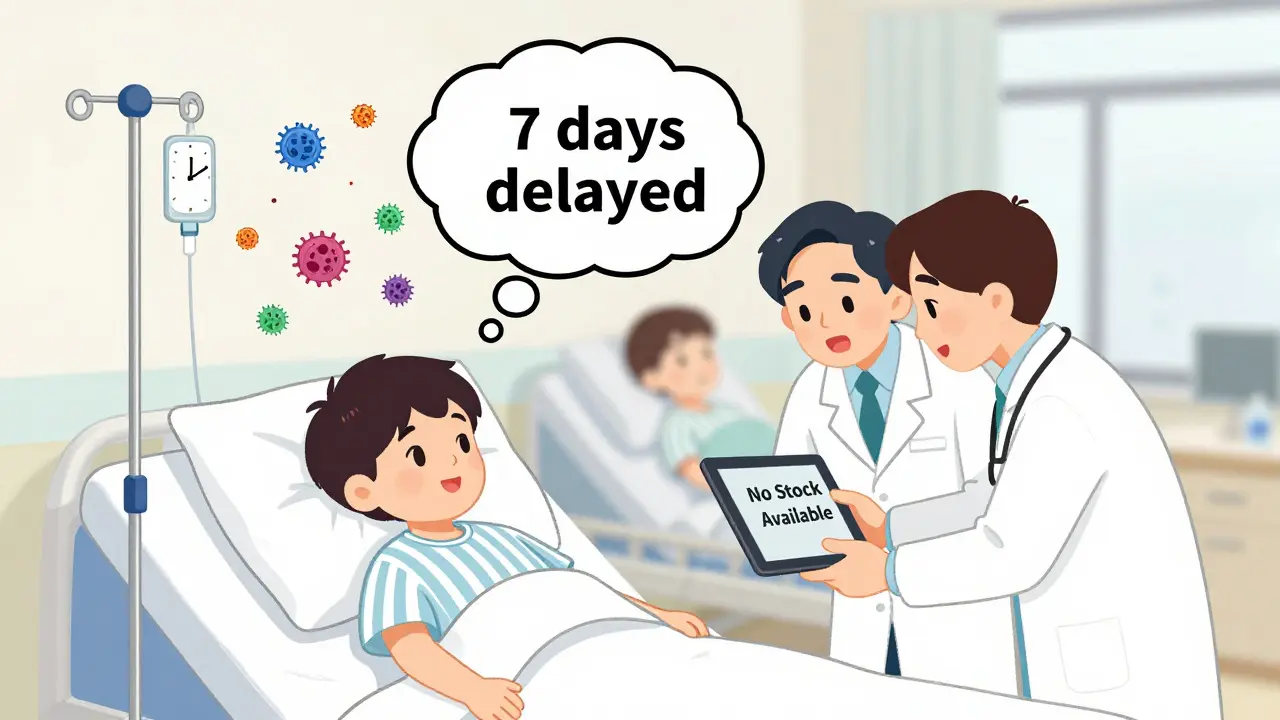
Why Do These Shortages Keep Happening?
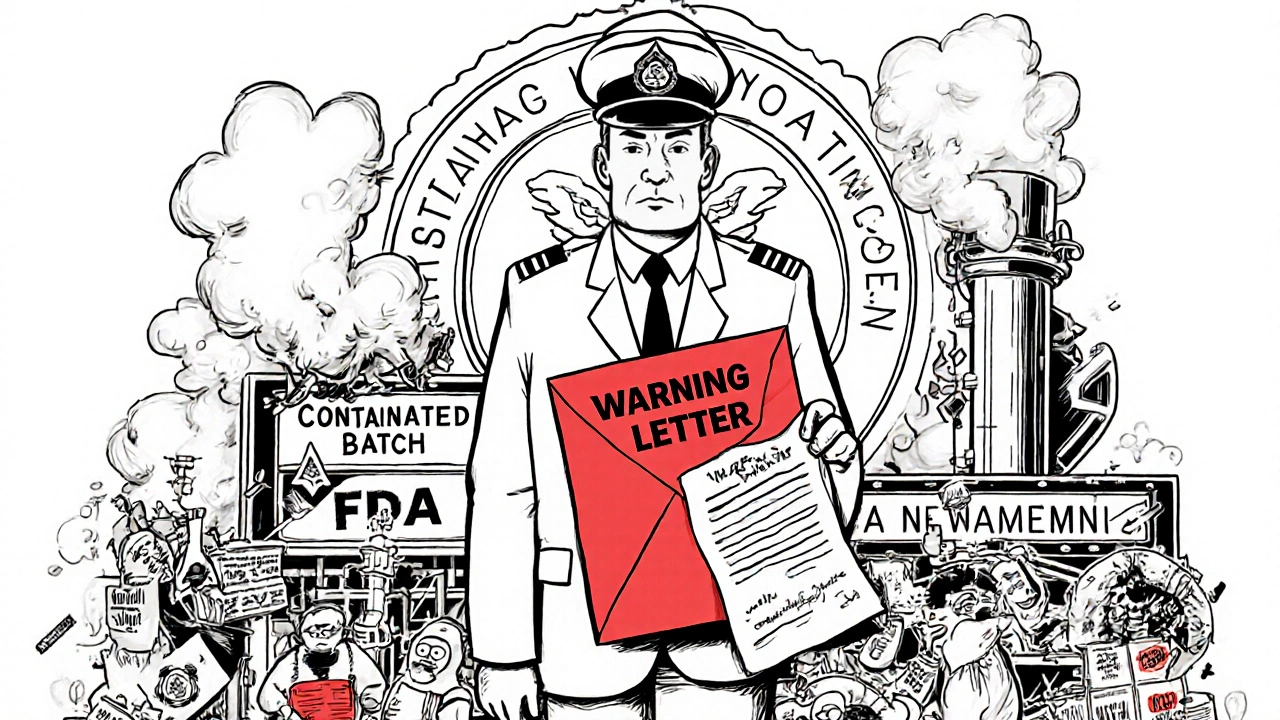
It’s not one problem-it’s a chain reaction. First, the supply chain is broken. Nearly half of all shortages trace back to global manufacturing issues. A single factory in India or China that produces the active ingredient for a generic drug can shut down over a quality violation-and there’s no backup. These factories often serve dozens of brands. When they go dark, the entire market feels it. Second, manufacturers don’t make money on low-cost drugs. Generic medications like heparin or IV saline have razor-thin profit margins. Companies don’t invest in maintaining multiple production lines. They don’t stockpile extra inventory. Why? Because the market doesn’t reward them for it. Third, regulatory delays add fuel to the fire. Even when a manufacturer fixes a problem, the FDA takes months to approve changes. A single inspection delay can stretch a shortage from weeks to years.How Are Hospitals Coping?
Pharmacists are working overtime. Hospitals now spend 15 to 20 hours per week per shortage just tracking inventory, calling suppliers, and training staff on new protocols. Pediatric units need even more time-up to 25% more-because of the complexity of dosing for children. Some hospitals have created shortage response teams. Others use automated monitoring systems that alert staff when a drug is running low. Group purchasing organizations like Vizient help by pooling demand across hundreds of hospitals to negotiate better access. Since 2023, these efforts have saved nearly $300 million in inventory costs. But even with these tools, the system is stretched thin. One pharmacist in Texas told a reporter: "I’ve spent 12 hours today trying to find a replacement for a drug that’s been gone for six months. I’m not a detective. I’m a pharmacist. I should be helping patients, not hunting for pills."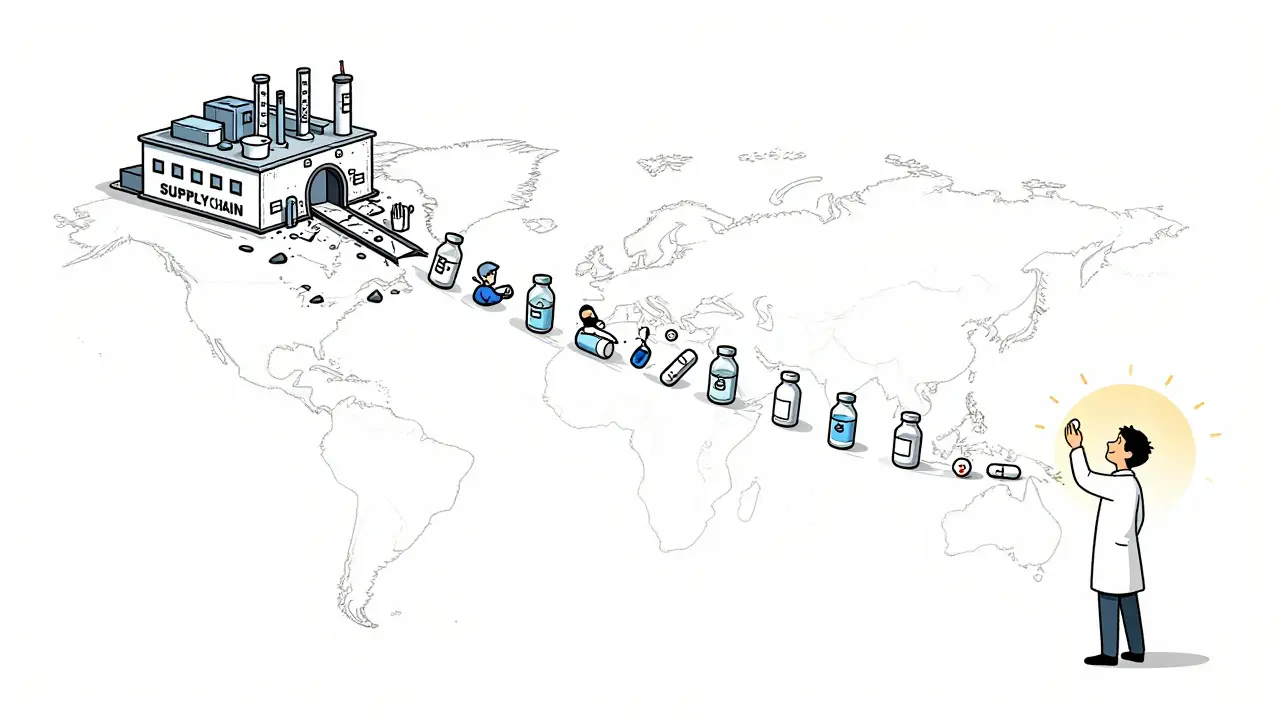
What’s Being Done-and What’s Not
In 2023, the FDA began requiring manufacturers to report potential shortages six months in advance. That’s a step forward. But it doesn’t fix the root problem. It just gives hospitals a little more warning before the crisis hits. Congress held hearings in late 2023 and early 2024. Experts called for incentives to keep domestic production running. Suggestions included tax breaks for manufacturers, mandatory stockpiles of critical drugs, and penalties for companies that don’t report shortages in time. But policy changes move slowly. Meanwhile, patients keep getting caught in the middle.What You Can Do
If you or a loved one rely on a medication that’s frequently in shortage, talk to your doctor. Ask: Is there a therapeutic alternative? Can we switch to a brand with more reliable supply? Are we eligible for patient assistance programs? Keep a list of your essential medications and their manufacturers. If your pharmacy runs out, call others. Sometimes, a nearby hospital pharmacy or specialty distributor still has stock. Advocate. Contact your representative. Ask why generic drug production isn’t being protected. Demand transparency from manufacturers. Shortages aren’t inevitable-they’re the result of choices we’ve made as a system.Is There Hope?
There’s a small glimmer. The number of active shortages dropped from 323 in early 2024 to 253 by mid-2025. That’s the first meaningful decline since 2022. Some hospitals are onshoring production. Others are building backup suppliers. A few manufacturers are finally investing in redundancy. But we’re not out of the woods. The system is still fragile. The incentives are still broken. The patients are still suffering. Until we treat drug shortages like the public health emergency they are-not just a supply chain hiccup-we’ll keep seeing the same stories: a child waiting for treatment. A senior skipping doses. A family bankrupted by a replacement drug they never asked for. This isn’t about politics. It’s not about profit margins. It’s about whether we believe everyone deserves access to the medicines they need to live.Why are generic drugs more likely to be in shortage?
Generic drugs make up 83% of all shortages because they have very low profit margins. Manufacturers don’t earn enough to justify maintaining multiple production lines or stocking extra inventory. When one factory shuts down due to quality issues or supply chain delays, there’s often no backup. Unlike brand-name drugs with patent protection and higher prices, generics rely on volume-and when demand drops or costs rise, companies simply stop making them.
Can drug shortages cause death?
Yes. Studies from the National Institutes of Health and the American Hospital Association show that drug shortages directly contribute to preventable deaths. For example, delays in cancer drugs like asparaginase reduce survival rates. Lack of antibiotics can lead to fatal infections. When patients can’t get essential medications like insulin or heparin, organ failure, strokes, and sepsis become more likely. One estimate suggests 1.1 million Medicare patients could die over the next decade because they can’t afford or access their prescribed drugs.
How do drug shortages affect hospitals financially?
Hospitals spend nearly $900 million annually just on labor costs related to drug shortages-overtime, emergency purchases, staff training, and protocol changes. Additional costs come from using more expensive alternative drugs, cancelled procedures, longer hospital stays, and medication errors. Pediatric facilities face even higher costs due to the complexity of finding safe substitutes for children. These expenses strain budgets already stretched thin by inflation and staffing shortages.
Are there alternatives when a drug is in shortage?
Sometimes, but not always. For some drugs, like antibiotics or pain relievers, there are effective substitutes. But for others-especially cancer drugs, anesthetics, and pediatric medications-no equivalent exists. Switching to a different drug can mean lower effectiveness, higher side effects, or even dangerous interactions. Pharmacists and doctors must weigh risks carefully, often with incomplete data. In many cases, the "alternative" is worse than the original drug.
What’s being done to fix drug shortages?
The FDA now requires manufacturers to report potential shortages six months in advance, which helps hospitals prepare. Group purchasing organizations like Vizient help hospitals pool orders to secure better supply. Some hospitals are building internal shortage teams and investing in automated tracking tools. Long-term, experts are pushing for government incentives to keep domestic manufacturing running, mandatory stockpiles of critical drugs, and penalties for non-reporting. But progress is slow, and most solutions are reactive-not preventive.
Drug shortages aren’t a glitch in the system. They’re a feature of how we’ve built it. Until we change the rules, patients will keep paying the price.





13 Comments