

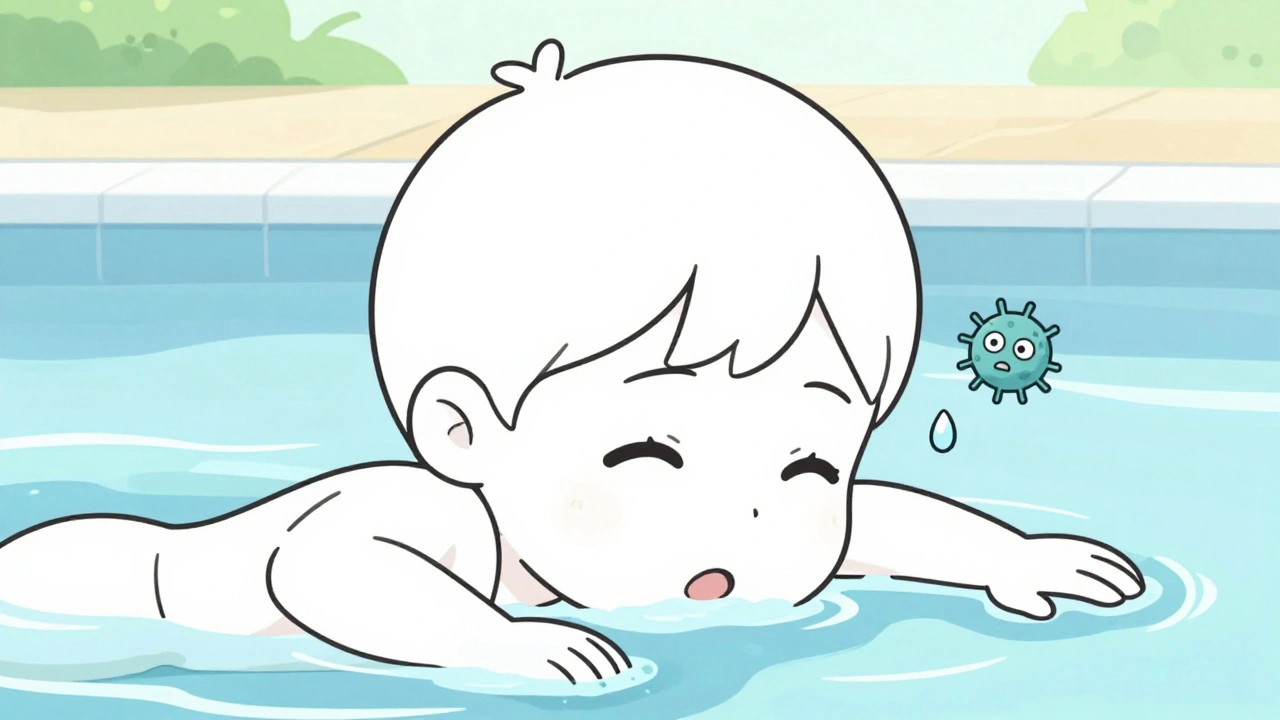
Swimmer’s ear isn’t just a nuisance after a long day at the pool-it’s a real infection that can turn a simple splash into days of pain, muffled hearing, and frustration. Unlike middle ear infections, which happen behind the eardrum, otitis externa attacks the skin lining your ear canal-the tunnel that leads from the outside of your ear to your eardrum. When this skin gets irritated, moist, and broken, bacteria or fungi move in fast. And once they do, you’re not just dealing with discomfort-you’re fighting an infection that won’t clear on its own.
What Actually Causes Swimmer’s Ear?
It’s not just swimming that triggers this. Sure, water trapped in your ear after a swim is the classic culprit, but it’s not the water itself-it’s what happens after. Water washes away the natural earwax that keeps your ear canal slightly acidic (around pH 5.0-5.7), which normally stops germs from growing. Once that protective layer is gone, bacteria like Pseudomonas aeruginosa (responsible for over half of cases) and Staphylococcus aureus start to thrive.
Other common triggers include:
- Scratching or poking your ear with cotton swabs, hairpins, or fingernails
- Wearing hearing aids or earbuds that rub and trap moisture
- Swimming in polluted water (lakes, hot tubs, poorly chlorinated pools)
- Having eczema or psoriasis in the ear canal
- Diabetes, which weakens your body’s ability to fight infection
It’s not rare, either. About 1 in 10 Americans get it each year, according to CDC estimates. Kids aged 7 to 12 and adults between 45 and 64 are most affected, and men are slightly more likely to get it than women. If you’ve ever felt that sharp, stabbing pain when you tug on your earlobe or chew food, you’ve probably had it.
How Bad Can It Get?
Otitis externa isn’t one-size-fits-all. It comes in three levels of severity, and knowing which one you have helps you pick the right treatment.
- Mild (45% of cases): Itchy, slightly red ear canal. Maybe a little discomfort when you touch your ear. No fever. You might hear your own voice echoing a bit.
- Moderate (35%): The ear canal swells enough to block sound. Pain gets worse, especially when you move your jaw. You might notice some discharge-clear, yellow, or even foul-smelling.
- Severe (20%): The canal is completely swollen shut. Pain is intense, radiating to your neck or jaw. Fever above 101°F (38.3°C), swollen lymph nodes, and even trouble opening your mouth. This is when you need to see a doctor right away.
Left untreated, severe cases can lead to malignant otitis externa-a rare but dangerous infection that spreads to the bone around the ear. It happens in less than 0.03% of cases, mostly in older adults with diabetes or weakened immune systems. But it’s serious enough that you shouldn’t ignore symptoms that get worse after a few days.
What Ear Drops Actually Work?
Not all ear drops are created equal. Some are sold over the counter. Others need a prescription. And picking the wrong one can delay healing-or make things worse.
For mild cases: The gold standard is a 2% acetic acid solution with hydrocortisone, sold under brand names like VoSoL HC Otic. This combo works in two ways: the acid restores your ear’s natural pH to kill bacteria, and the hydrocortisone reduces swelling and itching. Studies show it works in 85% of mild cases within 7 days. You can also find this formula over the counter as Swim-Ear, which costs about $15 for a 10mL bottle. It’s not a cure for an active infection, but it’s excellent for prevention after swimming.
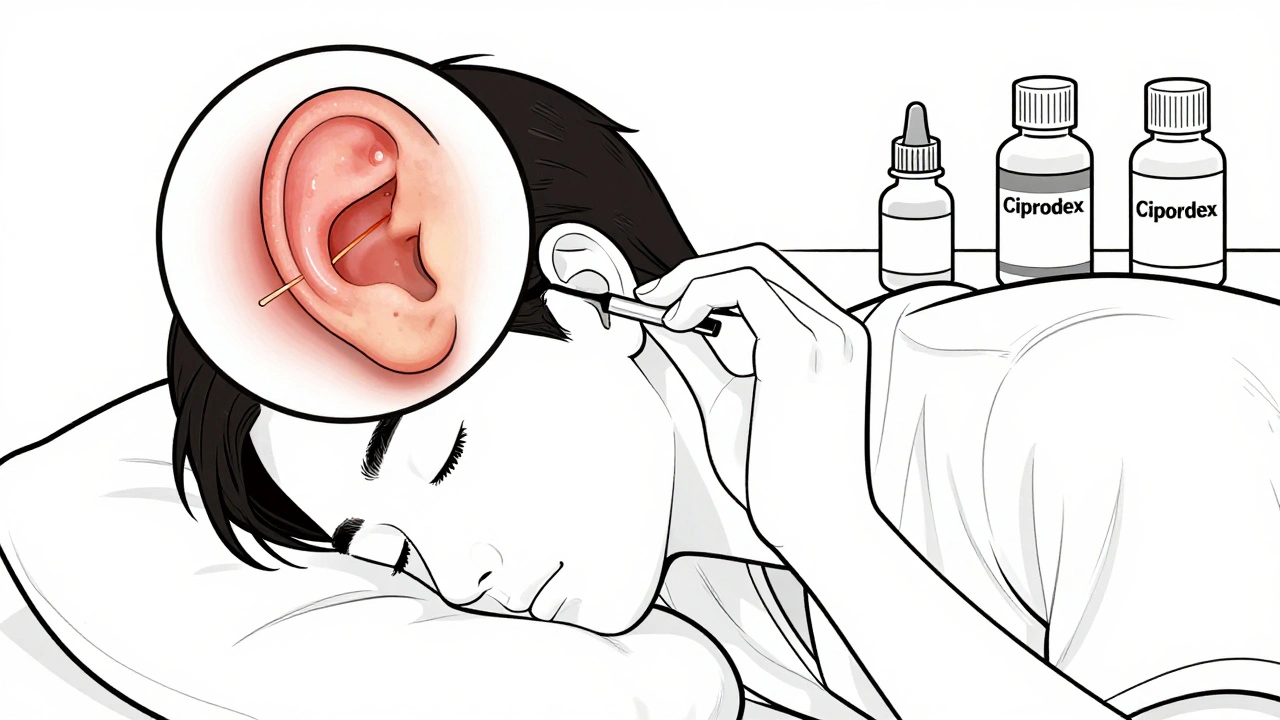
For moderate to severe cases: You need something stronger. The most effective option is a combination of an antibiotic and a steroid. Ciprodex (ciprofloxacin 0.3% + dexamethasone 0.1%) is the most prescribed. Clinical trials show it clears up symptoms in 92% of patients within 7 days. It works fast-many users report major pain relief within 24 hours. But it’s expensive: around $147.50 without insurance. A cheaper generic alternative is ofloxacin ear drops, which cost about $45 and have nearly the same success rate (88-90%).
There’s one big warning: never use drops with neomycin or polymyxin (like Cortisporin) unless your doctor says it’s safe. These older drops carry a risk of ototoxicity-meaning they can damage your inner ear if your eardrum is even slightly perforated. That’s rare, but it’s a risk you don’t need to take when safer options exist.
For fungal infections (otomycosis): About 10% of swimmer’s ear cases are fungal, usually caused by Aspergillus. These look different: more itching than pain, with white or black fuzzy growths visible in the ear canal. Acetic acid won’t touch these. You need antifungals like clotrimazole 1%, which works in 93% of cases. If you’ve tried antibiotic drops and it didn’t help after 5 days, fungal infection is likely.
How to Use Ear Drops Correctly (Most People Get It Wrong)
Even the best drops won’t work if you don’t use them right. A 2021 study found that 40% of people get less benefit simply because they apply drops incorrectly.
Here’s how to do it:
- Wash your hands.
- Warm the bottle in your hands for 1-2 minutes-cold drops can cause dizziness.
- Lie on your side with the infected ear facing up.
- Pull your earlobe gently up and back (for adults) or down and back (for kids) to straighten the canal.
- Instill the exact number of drops prescribed.
- Stay lying down for at least 5 minutes. Gently tug your earlobe every minute to help the drops move deeper.
- Wipe away any excess that drips out with a clean tissue.
- Never stick cotton swabs, fingers, or anything else in your ear. You’ll push the infection deeper and remove the medication.
If your ear canal is swollen shut, drops won’t get through. In those cases, a doctor may insert a small sponge-like ear wick to soak up the drops and deliver them directly to the infection. It’s uncomfortable, but it works.
What Doesn’t Work (And What Could Make It Worse)
There’s a lot of misinformation out there.
- Home remedies like vinegar and alcohol mixtures: These might help prevent infection after swimming, but they won’t cure an active infection-and they can sting badly if your skin is already raw.
- Oral antibiotics: The American Academy of Otolaryngology says they’re unnecessary for most cases. They offer barely any extra benefit over topical drops but increase side effects like nausea and diarrhea.
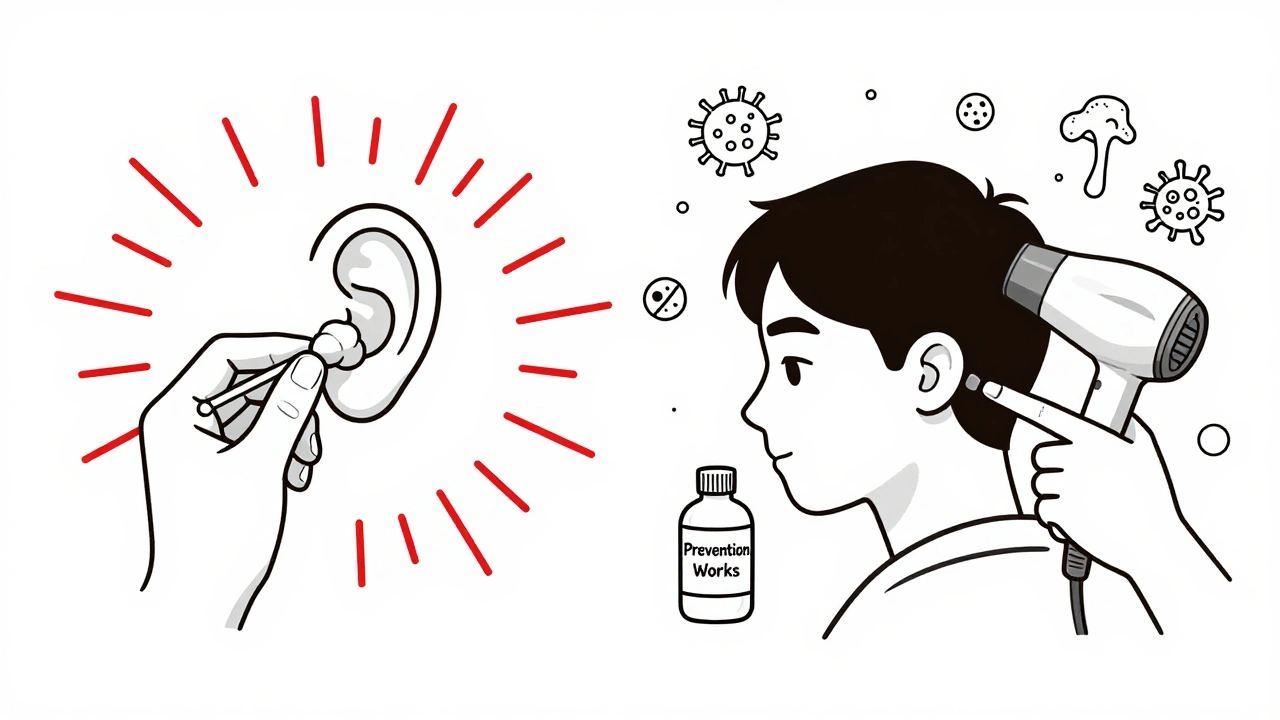
- Using cotton swabs to dry your ear: This is the #1 mistake. Swabbing removes protective wax, scrapes delicate skin, and pushes debris deeper.
- Ignoring symptoms for days: If you’ve had pain for more than 48 hours, or if it’s getting worse, see a doctor. Self-treating with OTC drops when you have a fungal infection or severe bacterial infection delays real treatment by a week or more.
Prevention: How to Avoid It Next Time
The best treatment is avoiding it altogether. Here’s what works:
- After swimming or showering, tilt your head to drain water. Gently pull your earlobe in different directions to help water escape.
- Use a hairdryer on the lowest, coolest setting-hold it 12 inches away and blow air into your ear for 30 seconds.
- Use Swim-Ear or a 2% acetic acid solution as a preventive rinse after swimming. It reduces recurrence by 65%.
- Don’t share earbuds, headphones, or swimming gear.
- If you have eczema or diabetes, be extra careful. Talk to your doctor about preventive drops if you swim regularly.
Swimming is great for your health. You shouldn’t have to give it up because of ear pain. With the right drops and habits, you can enjoy the water without fear.
Frequently Asked Questions
Can swimmer’s ear go away on its own?
Mild cases might improve on their own in a few days, but it’s risky to wait. Without treatment, the infection can spread, become chronic, or lead to complications like hearing loss or a more serious bone infection. Most people feel better within 2-3 days of using the right ear drops, so there’s no reason to suffer through it.
Are OTC ear drops enough for swimmer’s ear?
Only if your case is mild and you’re using it as a preventive measure. Products like Swim-Ear (2% acetic acid) are great for stopping infections before they start, but they won’t cure an active infection. If you’re in pain, have swelling, or discharge, you need a prescription antibiotic-steroid drop like Ciprodex or ofloxacin.
Why does my ear hurt when I chew or move my jaw?
The ear canal runs close to the jaw joint. When the canal is inflamed and swollen, any movement of the jaw-like chewing, talking, or yawning-pulls on the irritated tissue. That’s a classic sign of moderate to severe otitis externa. It’s not a tooth problem-it’s your ear.
Can I use ear drops if I have a perforated eardrum?
Only if your doctor says it’s safe. Drops containing neomycin, polymyxin, or gentamicin can damage your inner ear if your eardrum is torn. Fluoroquinolone drops like ciprofloxacin and ofloxacin are considered safe even with a small perforation. Always tell your doctor if you’ve had ear surgery or a ruptured eardrum in the past.
How long do I need to use the drops?
Follow your prescription exactly. Most antibiotic-steroid drops are used 2-3 times daily for 7 days, even if you feel better after 2 or 3. Stopping early can let the infection come back stronger. For prevention, use acetic acid drops once or twice a week after swimming.
Can children get swimmer’s ear?
Yes, especially kids between 7 and 12. Their ear canals are smaller and more easily irritated. They’re also more likely to swim frequently and poke their ears. The same drops used for adults are safe for kids, but always check dosage with your pediatrician. Never use drops meant for adults without adjusting the amount.
Next Steps
If you suspect swimmer’s ear, don’t wait. Start with prevention if you’re just feeling itchy after swimming. If pain has set in, see a doctor or visit a clinic within 24-48 hours. Most urgent care centers can diagnose it with a simple ear exam. If you’re on a tight budget, ask for generic ofloxacin-it’s just as effective as Ciprodex and costs a fraction of the price.
And remember: your ear canal is not a place for cotton swabs. Let your body do its job. Keep it dry, keep it clean, and treat it with care. That’s how you keep swimmer’s ear from taking over your summer-or your life.






8 Comments