To understand this, we have to look at bioequivalence standards is the regulatory requirement that a generic drug must deliver the same amount of active ingredient into a patient's bloodstream in the same amount of time as the brand-name drug . This isn't just a suggestion; it's a legal mandate established by the Hatch-Waxman Act of 1984. When a company wants to release a generic version of a drug, they can't just copy the formula; they have to prove that the absorption rate-how fast and how much of the drug reaches your system-matches the original.
The 80-125% Rule: Myth vs. Reality
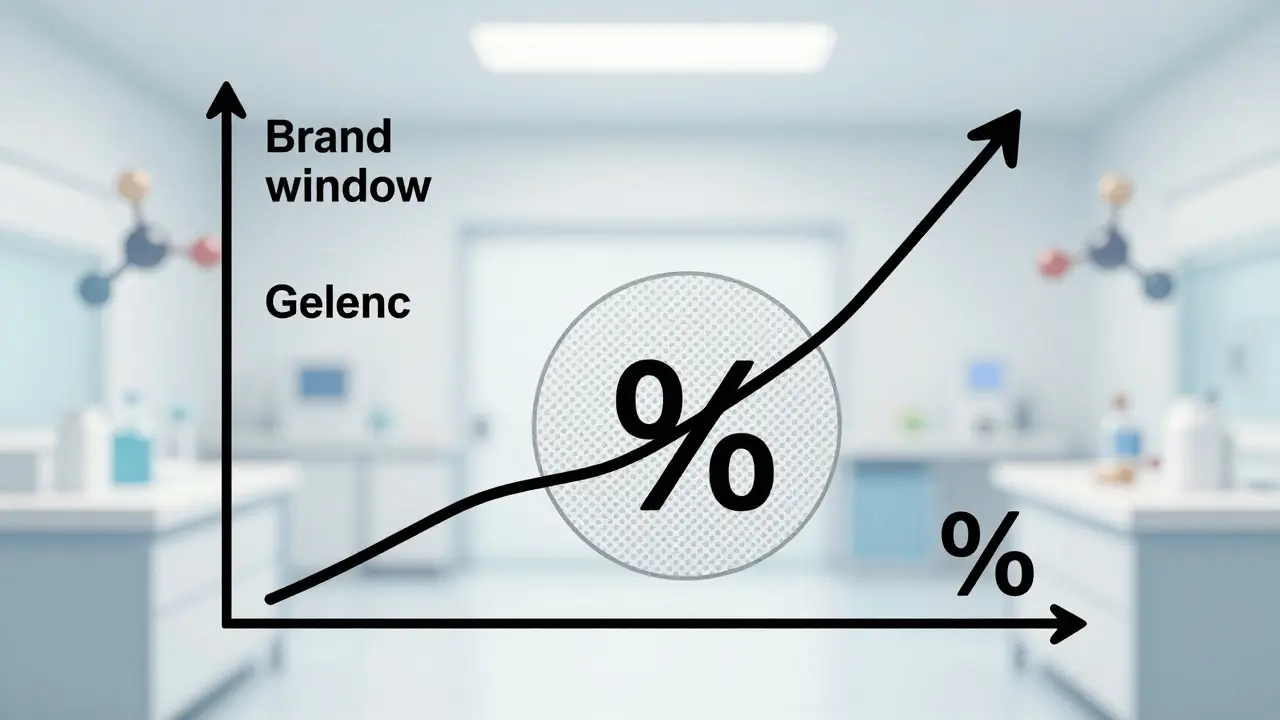
If you look at the official guidelines, you'll see a range: 80% to 125%. At first glance, this looks like a huge gap. You might think, "Wait, does that mean my generic could be 20% weaker or 25% stronger than the brand name?" Not exactly. That range is a statistical safety net called a 90% confidence interval. It isn't a measure of how much the potency fluctuates from pill to pill, but rather a mathematical way for the FDA to be certain that the average performance of the generic is nearly identical to the brand.
In the real world, the differences are tiny. A massive analysis of over 2,000 bioequivalence studies showed that the average difference in absorption between generic and brand-name medicines was only about 3.5%. In nearly 98% of these studies, the total amount of drug absorbed differed by less than 10%. For most people, this variation is far less than the natural difference in how your own body absorbs the same drug on a Tuesday versus a Thursday.
Measuring Success: AUC and Cmax
Regulators don't just guess if a drug is working; they use two specific metrics to track absorption. First, there is AUC (Area Under the Curve), which measures the total drug exposure over time. Think of AUC as the "total amount" of medicine that actually makes it into your system. If the AUC is too low, the drug might not work; if it's too high, you could experience more side effects.
The second metric is Cmax (Maximum Concentration). This measures the "peak"-the highest concentration of the drug in your blood and how quickly it gets there. Cmax is crucial for drugs that need to work fast, like painkillers or rescue inhalers. If the Cmax is too high, the drug might be too intense; too low, and it might not hit the required threshold to treat your symptoms.
| Metric | What it Measures | Clinical Importance | Standard Range |
|---|---|---|---|
| AUC | Total Exposure | Ensures the correct total dose is absorbed | 80-125% |
| Cmax | Peak Concentration | Ensures the drug reaches effective levels quickly | 80-125% |
The Dissolution Gap: Why Some Generics Feel Different
If the blood levels are so close, why do some people still insist they feel a difference? The answer often lies in dissolution testing, which is the process of measuring how fast a pill breaks apart in a liquid environment (simulating your stomach). Interestingly, some generics show significant differences here even if they pass the blood-level tests. For example, some studies found that generic nifedipine dissolved much slower than the brand name, while generic amoxicillin dissolved faster.
While a faster or slower dissolve rate might seem alarming, the FDA maintains that as long as the bioequivalence standards for AUC and Cmax are met, these differences don't change the clinical outcome. Your body might take a few minutes longer to break down the pill, but the total amount of medicine that eventually hits your bloodstream remains the same. For most of us, this is a non-issue. However, for those with extremely sensitive systems, this slight timing shift can be perceived as a difference in how the drug "feels."
High-Stakes Meds: Narrow Therapeutic Index Drugs
For most medications, the 80-125% window is plenty safe. But some drugs are like a tightrope-a tiny shift in concentration can be the difference between a working dose and a toxic one. These are called Narrow Therapeutic Index (NTI) drugs. Examples include Warfarin (a blood thinner), Digoxin (for heart failure), and Phenytoin (for seizures).
Because the margin for error is so slim, the FDA applies much tighter rules for NTI drugs. Instead of the standard window, these must typically fall within a 90-111% range. This ensures that switching from a brand to a generic doesn't accidentally push a patient into a danger zone or leave them unprotected. If you are taking an NTI drug, it's always a good idea to talk to your doctor before switching brands, just to ensure your levels remain stable.
Navigating the Orange Book and Ratings
If you want to know exactly how a generic compares to a brand, the FDA provides a resource called the Orange Book. This is essentially the master directory of approved drug equivalents. Within the book, generics are given ratings:
- A-Rated: These are therapeutically equivalent. They have passed the bioequivalence tests and are generally considered interchangeable. In 49 U.S. states, pharmacists can automatically substitute an A-rated generic for a brand name.
- B-Rated: These have some documented bioequivalence issues. While they may still be safe, they aren't considered perfectly interchangeable. Some experts suggest using B-rated generics for new patients rather than switching a stabilized patient over to them.
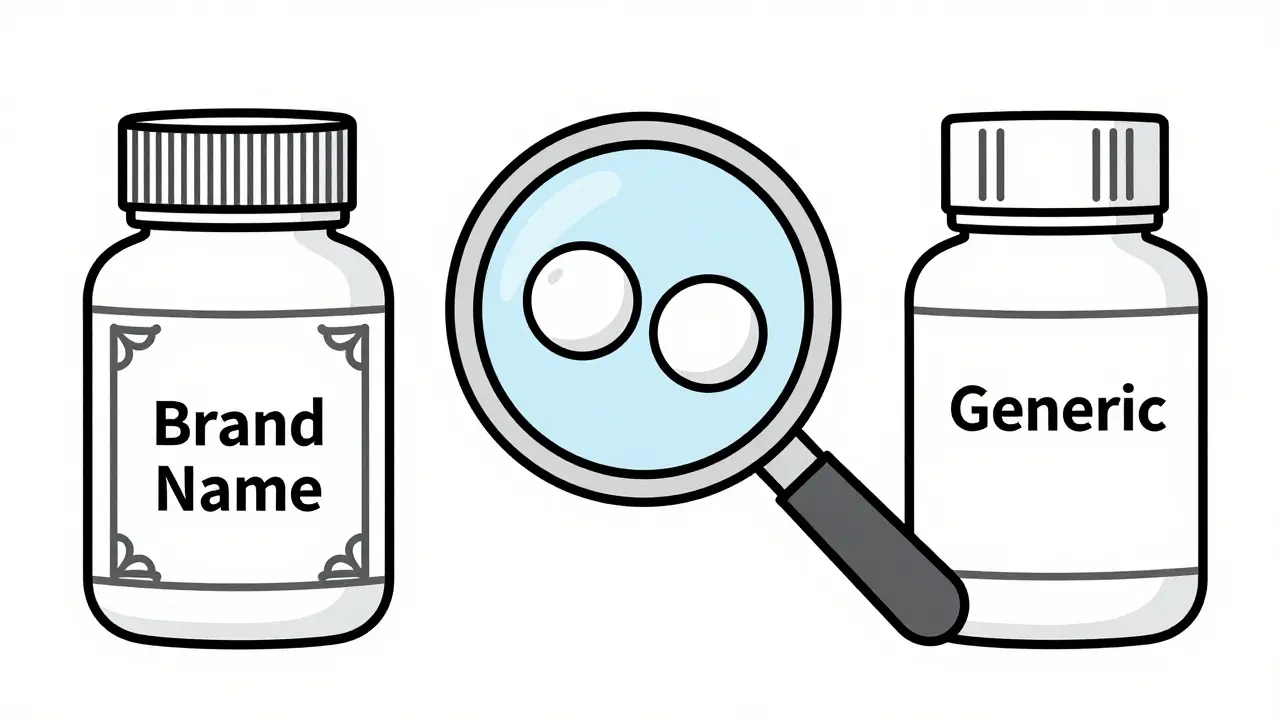
It's also worth noting that generics can't look exactly like the brand-name version. Due to trademark laws, they must have different colors, shapes, or flavors. This is purely cosmetic and has zero impact on how the drug works in your body.

The Big Picture: Is it Safe to Switch?
When we look at the data, the fear of generics is largely unsupported. A meta-analysis of nearly 10,000 patients found no significant difference in clinical outcomes between generic and brand-name cardiovascular drugs. Furthermore, the FDA has documented only 12 cases of therapeutic inequivalence among over 14,000 approved generics-a failure rate of just 0.08%.
The cost savings are the most tangible benefit. Generic drugs account for 90% of all prescriptions filled in the U.S. but only 23% of the total spending. For many, the choice isn't just about preference; it's about affordability. With the average generic copay often under $20 compared to much higher brand costs, the bioequivalence framework makes healthcare accessible without sacrificing safety.
Why does my generic drug look different from the brand name?
This is due to trademark laws. Generic manufacturers are legally required to make their pills a different color, shape, or size so they don't confuse the product with the original brand-name drug. These physical differences do not affect the drug's absorption or effectiveness.
Can a generic drug be "weaker" than a brand name?
In practice, no. To be approved, a generic must prove that its absorption rate (AUC and Cmax) falls within a strict statistical window (80-125%). Actual studies show that most generics differ from the brand by only about 3.5% on average, which is clinically insignificant for the vast majority of patients.
What are NTI drugs and why do they have different rules?
NTI stands for Narrow Therapeutic Index. These are drugs where a very small change in blood concentration can lead to toxicity or treatment failure (like warfarin or digoxin). Because of this risk, the FDA requires a much tighter bioequivalence range (typically 90-111%) to ensure maximum safety.
What is the difference between an A-rated and B-rated generic?
An A-rating in the FDA's Orange Book means the drug is therapeutically equivalent and interchangeable. A B-rating means the drug is approved, but there are some concerns about its bioequivalence, meaning it might not be a perfect swap for a brand-name version in all patients.
If the blood levels are the same, why do some people feel different side effects?
This can happen because of differences in dissolution rates-how fast the pill breaks down in the stomach-or the use of different inactive ingredients (fillers and dyes). While the active ingredient reaches the blood in the same amount, the way it's delivered or the body's reaction to the fillers can vary.
Next Steps for Patients and Caregivers
If you are concerned about a medication switch, start by checking the FDA Orange Book to see if your generic has an "A" rating. For those on standard medications, the switch is usually seamless. However, if you are taking a medication for a critical condition-like a seizure disorder or a heart rhythm issue-ask your doctor if your drug is considered "Narrow Therapeutic Index." In those cases, it's best to stick with one manufacturer consistently to avoid any fluctuation in blood levels.