

Not all headaches are the same. You might think a headache is just a headache - but the pain you feel could be one of three very different things: a tension headache, a migraine, or a cluster headache. Each has its own pattern, triggers, and treatment. Getting it wrong can mean months of unnecessary suffering. And it happens more often than you think - up to half of all headache patients are misdiagnosed. Let’s break down exactly how these three types differ, so you know what you’re really dealing with.
Tension-Type Headaches: The Most Common, But Often Misunderstood
Tension-type headaches are the most common kind. Around 42% of people worldwide get them at some point. They’re not dangerous, but they can be annoyingly persistent. The pain is usually mild to moderate, feels like a tight band around your head, and affects both sides - forehead, temples, or the back of your head. People often describe it as pressure, not throbbing. It doesn’t get worse when you walk or climb stairs, which is a big clue.
Episodic tension headaches last anywhere from 30 minutes to 7 days. If you have them 15 or more days a month for three months straight, it’s called chronic tension-type headache. Women are about 1.4 times more likely to get them than men. Stress, poor posture, or staring at a screen too long can trigger them, but there’s no clear link to food or hormones like with migraines.
What sets them apart? Almost nothing else. No nausea. No light sensitivity. No vomiting. If you have those symptoms, it’s probably not tension. And here’s something surprising: only 5-10% of tension headache sufferers have trouble with bright lights or loud noises. That’s way lower than migraine.
Most people handle these on their own. Over-the-counter painkillers like ibuprofen or acetaminophen work for about 70% of cases. No need for fancy meds or emergency visits.
Migraines: More Than Just a Bad Headache
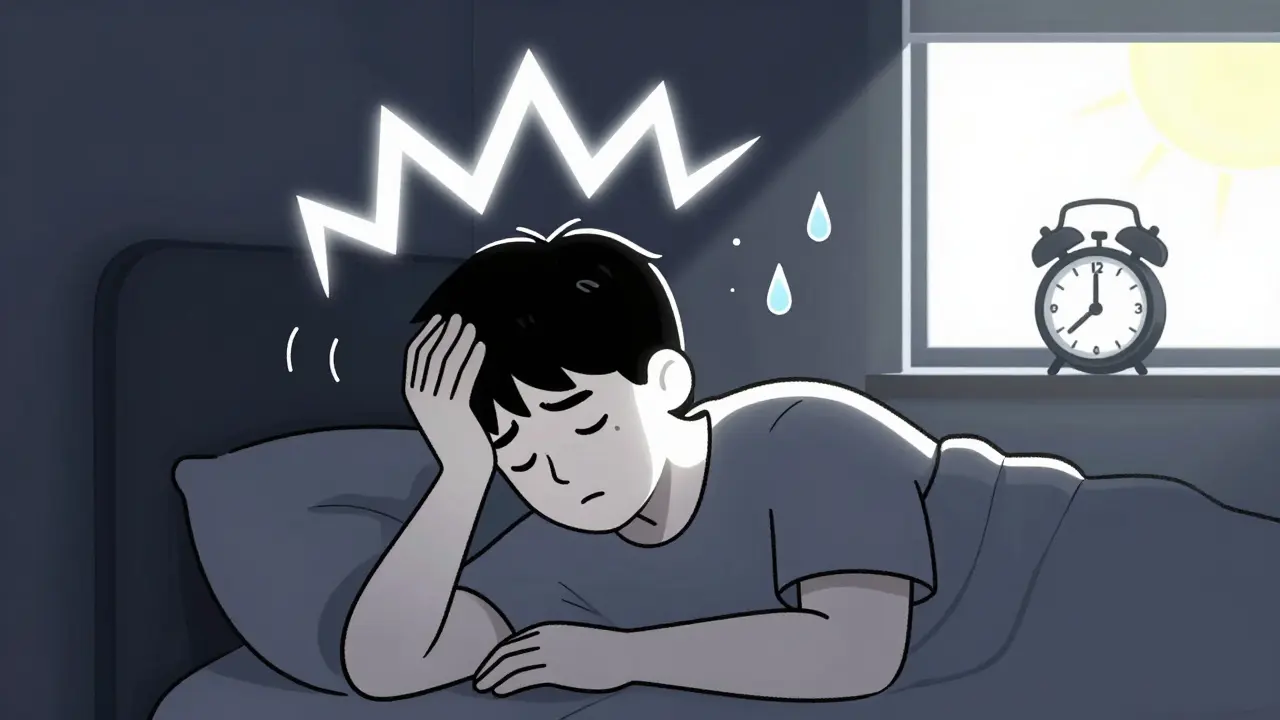
Migraines aren’t just headaches. They’re a neurological event. About 20% of women and 10% of men have them. They usually strike between ages 35 and 39, and can last anywhere from 4 to 72 hours if untreated. The pain is often one-sided and pulsing - like a drumbeat in your skull - but about 40% of people feel it on both sides.
The real giveaway? The other symptoms. Nine out of ten migraine sufferers feel nauseous. Eight in ten can’t stand bright lights or loud sounds. Some get an aura - visual disturbances like flashing lights, blind spots, or zigzag lines - before the headache hits. That happens in 25-30% of cases and can last 5 to 60 minutes.
Unlike tension headaches, migraines can completely shut you down. You might need to lie in a dark, silent room for hours. You can’t work, drive, or even talk. Many people miss work or school because of them. That’s why migraines cost the U.S. economy $36 billion a year in lost productivity and medical bills.
Treatment isn’t just about painkillers. Regular NSAIDs often don’t cut it. You need specific migraine meds like triptans or CGRP inhibitors. These work for 50-70% of people. If you’ve tried Advil and it didn’t help, that doesn’t mean you’re just stressed - it might be a migraine.
Here’s a myth to clear up: there’s no such thing as a “cluster migraine.” Some people with migraines have eye watering or a stuffy nose during an attack, but that doesn’t make it a cluster headache. A specialist told me: “If someone says they have cluster migraines, they’re mixing up two very different conditions.”
Cluster Headaches: The Worst Pain You’ve Never Heard Of
Cluster headaches are rare - only about 1 in 1,000 people get them. But if you’ve had one, you’ll never forget it. The pain is excruciating, rated 8 to 10 on a pain scale. It’s always one-sided, centered around the eye or temple. Attacks last 15 to 180 minutes - most around 45 to 90 minutes - and can happen 1 to 8 times a day during a cluster period.
Cluster periods last 6 to 12 weeks. They often happen at the same time every day - even waking you up in the middle of the night. About 40% of people notice patterns tied to seasons, like spring or fall.
The symptoms are unmistakable. On the same side as the pain, you’ll likely have: a watery eye, redness in the white of the eye, a stuffy or runny nose, a drooping eyelid, or a sweaty forehead. These aren’t side effects - they’re part of the headache. That’s why doctors call cluster headaches a type of trigeminal autonomic cephalalgia (TAC). The brain’s hypothalamus - the part that controls your internal clock - is overactive during these attacks.
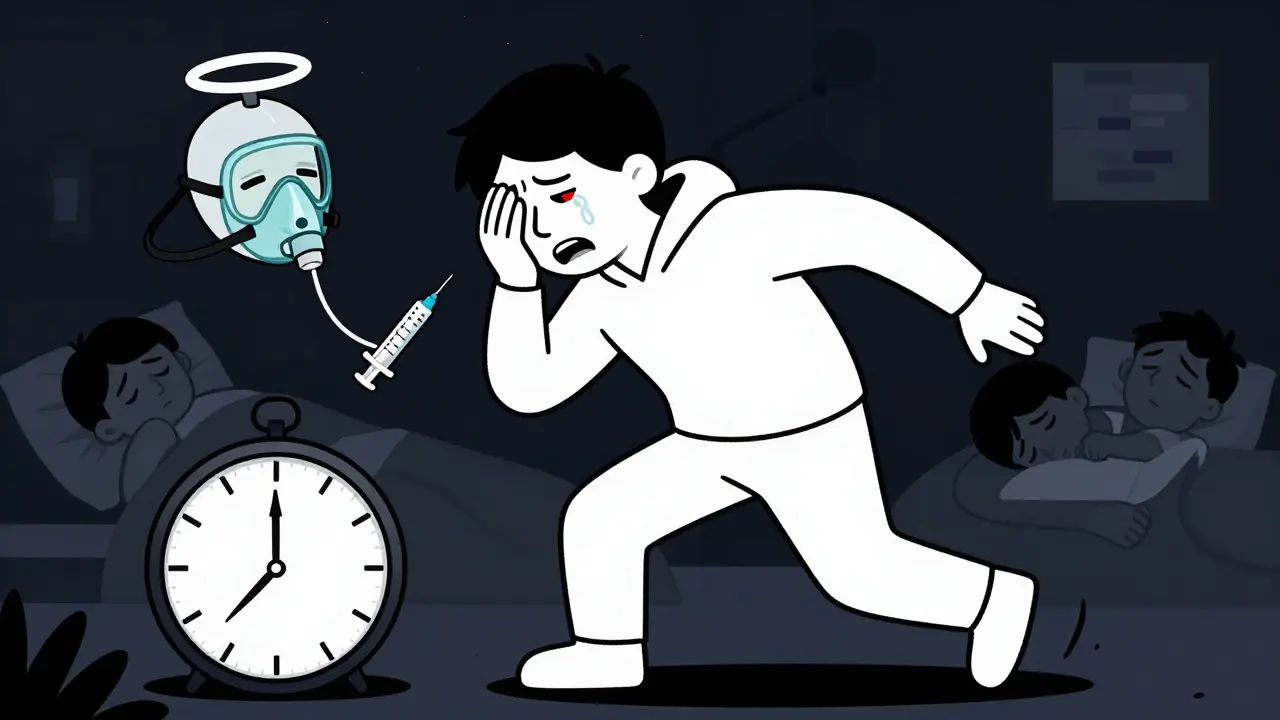
People with cluster headaches can’t stay still. Many pace, rock, or even bang their heads against walls. One Reddit user described it as “1,000 times worse than childbirth.” That’s extreme, but it’s not an exaggeration to them.
Treatment is urgent. Oxygen therapy - breathing pure oxygen through a mask - works for 70-80% of people within 15 minutes. Subcutaneous sumatriptan (an injection) works in 75% of cases. Oral pills? Usually useless. And yes, this is why so many cluster headache patients end up in the ER.
How to Tell Them Apart - The Quick Diagnostic Guide
Here’s a simple way to compare the three:
| Feature | Tension-Type Headache | Migraine | Cluster Headache |
|---|---|---|---|
| Pain location | Bilateral (both sides) | Usually one side, sometimes both | Always one side |
| Pain quality | Pressure, squeezing | Pulsating, throbbing | Excruciating, burning |
| Duration | 30 min - 7 days | 4 - 72 hours | 15 - 180 minutes |
| Attack frequency | Occasional or daily | 1-4 per month | 1-8 per day during cluster period |
| Nausea or vomiting | Rare | 90% of cases | Very rare |
| Light/sound sensitivity | 5-10% | 80% | 30-40% |
| Autonomic symptoms | None | Occasional (eye watering, nasal stuffiness) | Always - red eye, tearing, nasal blockage, drooping eyelid |
| Behavior during attack | Can usually function | Rest in dark, quiet room | Pacing, agitation, restlessness |
| First-line treatment | NSAIDs (ibuprofen, aspirin) | Triptans, CGRP inhibitors | High-flow oxygen, sumatriptan injection |
One thing to remember: if you have autonomic symptoms like a red eye or runny nose, but your pain lasts longer than 3 hours, it’s probably a migraine - not a cluster headache. That misdiagnosis happens in about 20% of ER cases.
Why Diagnosis Matters - And How to Get It Right
Most doctors get only 4 hours of headache training in medical school. That’s not enough. So if you’re suffering, don’t rely on a rushed exam. Keep a headache diary for at least four weeks. Write down:
- When the pain started and how long it lasted
- Where it hurt and how strong it was (use 0-10 scale)
- What you were doing before it hit
- Any symptoms besides pain - nausea, light sensitivity, eye changes
- What helped (or didn’t)
Bring this to a neurologist or headache specialist. They’ll know what to look for. Don’t settle for “it’s just stress.”
And if you’re told you have “cluster migraines”? Ask for clarification. That’s not a real diagnosis. Cluster headaches and migraines are separate conditions - with different causes, treatments, and outcomes.
What’s New in Treatment?
There’s real progress. In 2023, the FDA approved atogepant (Qulipta) as the first oral drug specifically for preventing cluster headaches. In trials, it cut attacks by 71% - much better than placebo. For migraines, newer CGRP blockers are changing lives. And for those who don’t respond to anything, deep brain stimulation of the hypothalamus is showing promise - 68% of patients had complete relief after a year.
Non-invasive devices, like vagus nerve stimulators worn on the neck, are also in late-stage trials. They’ve helped 50% of migraine patients cut attack frequency by half.
These aren’t just lab results. Real people are getting back to work, parenting, and living without constant fear of their next attack.
Final Thought: Your Pain Is Real - Don’t Let It Be Ignored
Tension headaches, migraines, and cluster headaches are not the same. They don’t respond to the same treatments. And they don’t have the same impact on your life. One might make you grumpy. Another might leave you bedridden. The third might make you feel like you’re being stabbed in the eye.
If you’ve been told your headache is “just stress,” or if OTC meds don’t help, it’s time to dig deeper. Track your symptoms. See a specialist. Ask the right questions. Because getting the diagnosis right doesn’t just stop the pain - it gives you your life back.
Can tension headaches turn into migraines?
No, tension headaches and migraines are separate conditions with different causes. But having frequent tension headaches can make you more sensitive to pain overall, which might lower your threshold for triggering a migraine. That doesn’t mean one turns into the other - it just means your nervous system is more reactive.
Why do cluster headaches happen at the same time every day?
Because they’re tied to your body’s internal clock. The hypothalamus - the brain region that controls sleep, hunger, and circadian rhythms - becomes overactive during cluster periods. That’s why attacks often hit at night or early morning, and why they follow seasonal patterns. It’s not random - it’s neurological.
Is it possible to have both migraines and cluster headaches?
Yes, though it’s rare. Some people experience both, but they’re still distinct events. One might feel like a pulsing, nausea-filled migraine, while another is a sharp, one-sided attack with a watery eye. The key is tracking patterns - if your symptoms change drastically in location, duration, or autonomic features, it’s likely two separate conditions.
Can stress cause cluster headaches?
Stress doesn’t trigger cluster headaches. Unlike migraines, which can be triggered by stress, lack of sleep, or certain foods, cluster headaches are driven by brain activity in the hypothalamus. Alcohol can worsen an attack during a cluster period, but it doesn’t start them. The cause is still not fully understood - but it’s not psychological.
Are cluster headaches more common in men?
Yes. Cluster headaches affect about 3-4 times more men than women. Migraines are the opposite - more common in women. Tension headaches affect both genders fairly evenly, with women slightly more affected. Gender patterns like this help doctors rule out possibilities during diagnosis.
Can I prevent migraines with lifestyle changes?
Yes, for many people. Regular sleep, avoiding known triggers (like red wine, strong smells, or skipped meals), staying hydrated, and managing stress can reduce frequency. But for some, genetics and brain chemistry play a bigger role - so lifestyle alone won’t stop all attacks. That’s why medication is often needed.






11 Comments