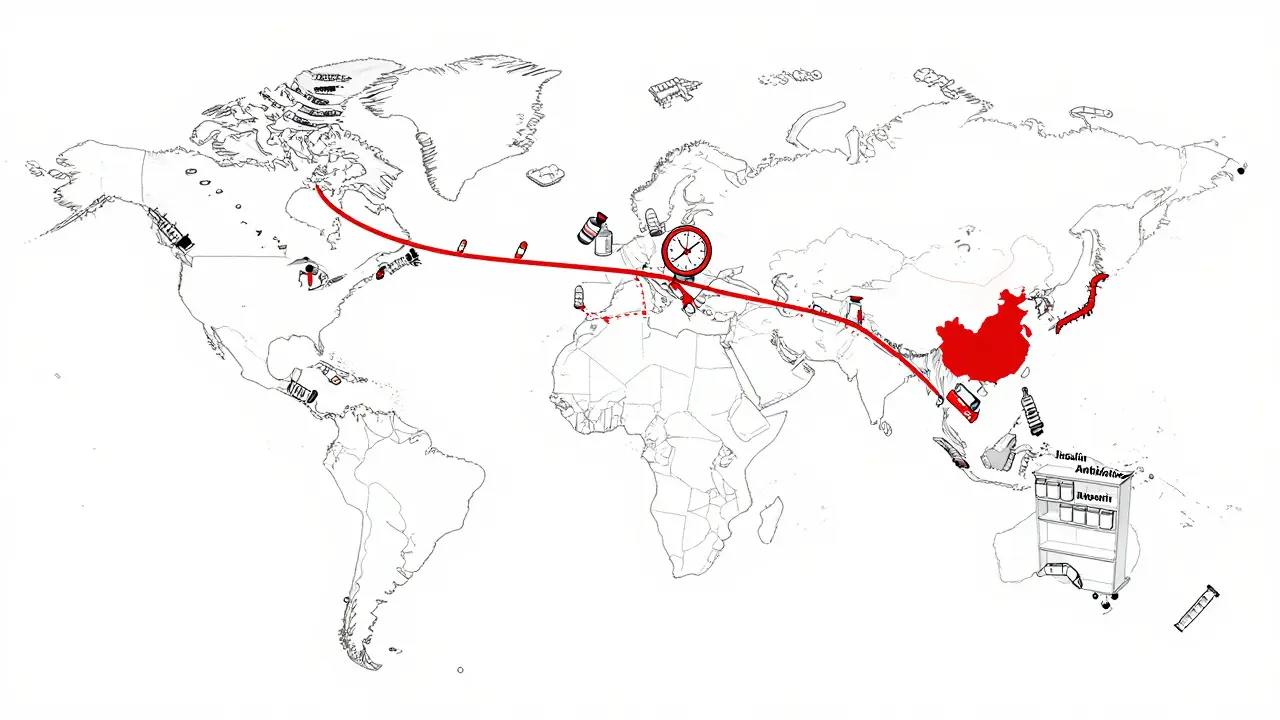
Think of a specialty pharmacy as a high-tech hub for the most complex meds in the medical world. While your local drugstore handles the common stuff, these specialized centers deal with medications that are often expensive, hard to store, or tricky to administer. But here is where it gets interesting: when a generic specialty drug or a biosimilar hits the market, does it suddenly become a "regular" pharmacy job? Not exactly. For these medications, the complexity of the care-not the price tag or the brand name-is what dictates who handles the dispensing.
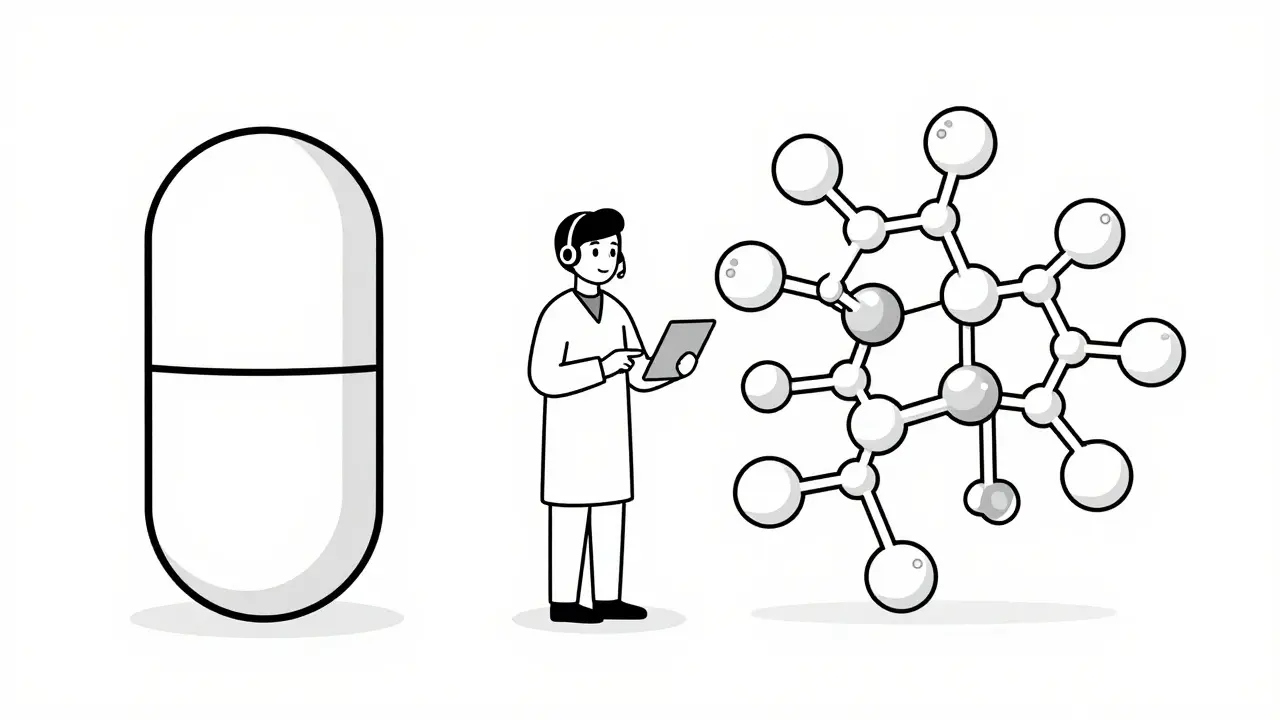
Whether a drug is a brand-name biologic or a generic version of a small-molecule specialty med, the requirements for handling it don't just disappear. These drugs often involve protein-based molecules produced via biotechnology, meaning they are far more volatile than a standard aspirin tablet. Because of this, the role of the provider shifts from being a simple dispenser to acting as a clinical coordinator for the patient.
What Actually Makes a Specialty Pharmacy Different?
It is a common misconception that specialty pharmacies only exist to manage high costs. In reality, they are designed around the technical needs of the drug. For instance, Specialty Pharmaceuticals is a class of medications, often large injectable molecules, that require specialized handling, administration, and strict patient monitoring . These aren't just pills you pick up in a drive-thru; they are often infused into a vein or injected, sometimes requiring a clinic visit.
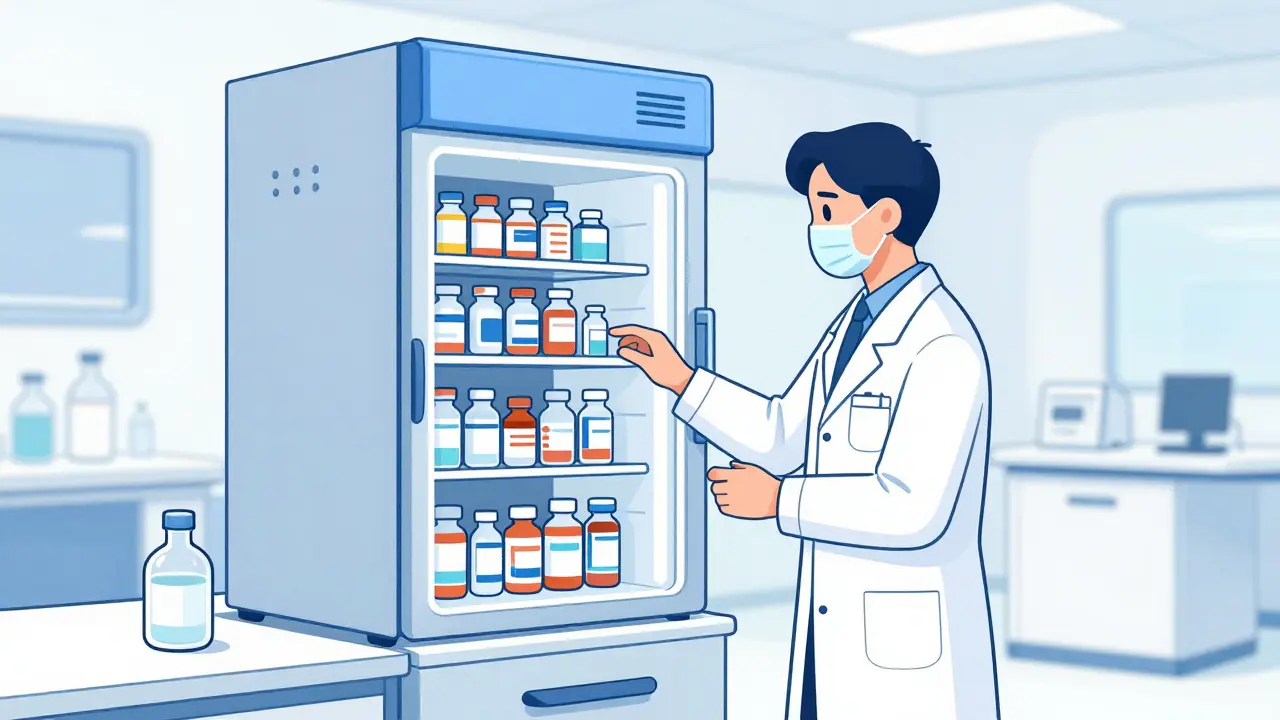
To handle these, providers must invest in specific infrastructure. This includes cold-chain logistics-keeping products strictly between 2-8°C-and sophisticated electronic prescribing systems. They also manage REMS (Risk Evaluation and Mitigation Strategies), which are FDA-mandated protocols designed to ensure the benefits of a drug outweigh its risks. If a generic specialty drug carries the same risks as the brand version, the REMS requirements remain identical, keeping the medication firmly in the specialty pharmacy's domain.
The Generic Shift: Biosimilars and Small-Molecules
When we talk about "generics" in the specialty world, we have to split them into two groups. First, there are small-molecule drugs. If a generic version of a small-molecule specialty drug is released, it might occasionally move to a retail pharmacy if it doesn't require special handling. However, if the manufacturer mandates a specialty channel, the retail pharmacy is locked out regardless of the drug's generic status.
Then there are Biosimilars, which are the functional equivalents of biologic medicines, as exact chemical copies are impossible due to the complexity of living cells . Because biosimilars are almost as complex as the original brand-name biologics, 98% of them are still distributed through specialty pharmacies. The provider's role here is to guide the patient through the transition, ensuring the biosimilar is working as intended without causing new adverse reactions.
| Feature | Retail Pharmacy (Generic) | Specialty Pharmacy (Generic/Biosimilar) |
|---|---|---|
| Turnaround Time | Fast (Avg. 1.2 days) | Slower (Avg. 7.2 days) |
| Patient Interaction | Transactional (Pick-up) | Clinical (Nursing/Coordination) |
| Storage | Standard Shelving/Fridge | Strict Cold-Chain (2-8°C) |
| Documentation | Minimal (5-7 elements) | Extensive (12-15 elements) |
The Provider's Workflow: More Than Just Dispensing
For a provider, dispensing a generic specialty drug isn't a "ding-dong, here are your pills" experience. It is a high-touch service model. The process usually follows a strict sequence: prescription intake, prior authorization, financial assistance coordination, and finally, clinical counseling.
One of the biggest hurdles is the prior authorization process. Even for generics, insurance companies often require a mountain of paperwork to prove the drug is necessary. Providers are now using "Real-Time Prescription Benefit" technology to cut this down, which has been shown to reduce waiting times by over three days. This allows the patient to start their therapy faster, which is critical for oncology or rheumatoid arthritis treatments.
Providers also act as a safety net. They don't just ship the drug; they call the patient to remind them of refills, monitor for adverse events, and help schedule the necessary lab tests. This level of care is why many patients actually prefer staying with their specialty provider when switching to a generic version-they've already built a relationship with the nurse or pharmacist who knows their medical history.
The Economic Landscape and Distribution Models
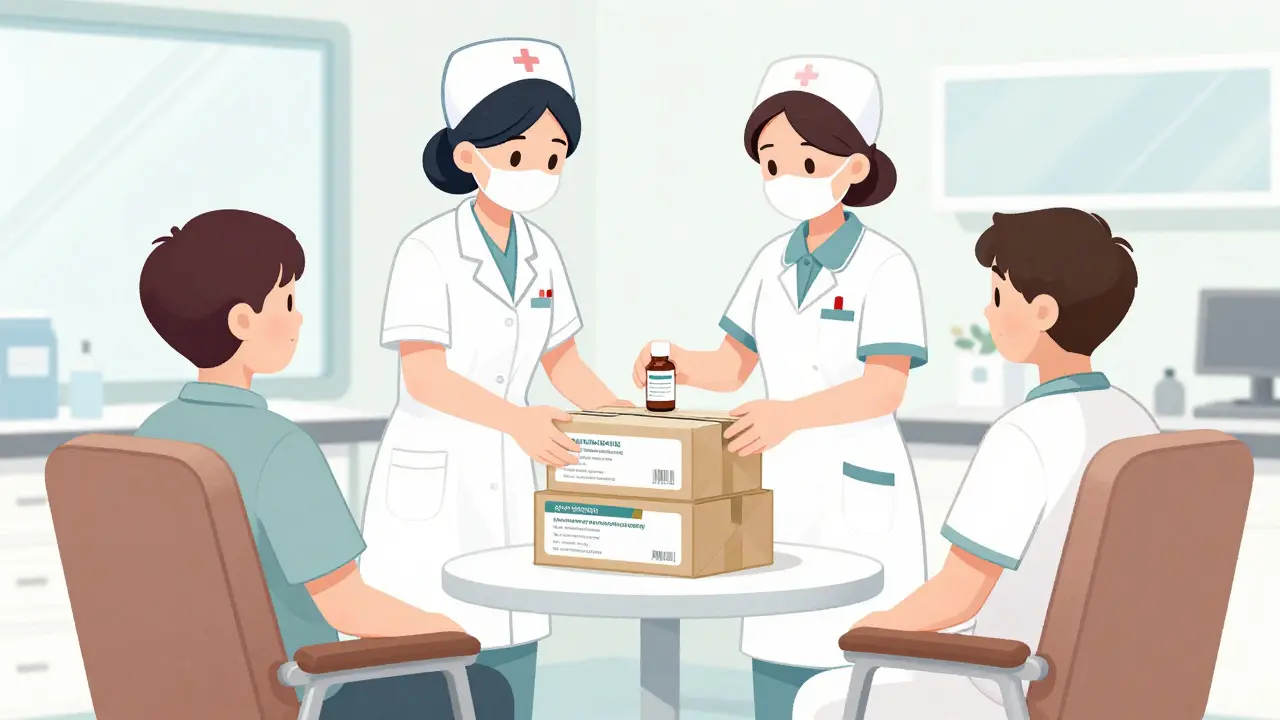
The money moving through this sector is staggering. In 2023, specialty pharmacy represented about $215 billion of the U.S. market. While generic versions typically lower the cost per dose, the Dispensing Fee is often where the provider's value is captured, with fees ranging from $250 to $500 per prescription. This fee covers the intensive labor of patient coordination, not just the physical product.
We are also seeing a rise in "white bagging" and "brown bagging." This is when a specialty pharmacy dispenses the medication, but it's administered in a clinic or hospital setting. This model is becoming common for both brand and generic specialty drugs because it allows the clinic to focus on the medical administration while the pharmacy handles the complex insurance and shipping logistics.
Challenges and the Future of Specialty Care
It isn't all smooth sailing. Patients often vent on forums like Reddit about the "specialty tax"-the frustration of seeing a copay rise or delivery times stretch to two weeks when moving a generic med into a specialty channel. There is a tension between the efficiency of retail and the clinical depth of specialty providers.
Looking ahead, the big shift is the move toward in-house dispensing. Many health systems are tired of the fragmentation and want to fill all their patients' scripts-specialty or not-under one roof to avoid drug interactions. However, the sheer technical requirement of managing biosimilars means that dedicated specialty providers will likely remain essential. As Medicare Part D expands coverage for all FDA-approved biosimilars, the volume of generic specialty drugs will only grow, pushing providers to further automate their onboarding while keeping the "human touch" for clinical support.
Why can't I get my generic specialty drug at a regular pharmacy?
Many specialty drugs, even generics, are restricted by the manufacturer to a "limited distribution network." This means only certified specialty pharmacies have the license to sell them. Additionally, these drugs often require strict temperature controls and clinical monitoring that standard retail pharmacies aren't equipped to provide.
Is a biosimilar the same thing as a generic specialty drug?
Not exactly. A traditional generic is a chemical copy of a small-molecule drug. A biosimilar is a biological product that is "highly similar" to an approved reference biologic. Because biologics are made from living cells, they can't be perfectly copied, which is why we use the term biosimilar instead of generic.
How long does it usually take to receive a specialty medication?
On average, it takes about 7.2 days from the time the prescription is received to when it's ready for delivery. However, this varies by disease; oncology meds might take longer (around 8.7 days), while rheumatoid arthritis meds are often faster (around 5.3 days).
What is a REMS protocol?
REMS stands for Risk Evaluation and Mitigation Strategies. It is a safety program required by the FDA for certain high-risk medications. The specialty pharmacy ensures the patient is educated on the risks and that the required safety checks (like pregnancy tests or blood work) are completed before the drug is dispensed.
Will switching to a generic specialty drug change my care team?
Not necessarily. In many cases, you stay with the same specialty pharmacy and the same care coordinators (nurses and pharmacists) when transitioning from a brand-name drug to a biosimilar or generic, ensuring continuity of care.