

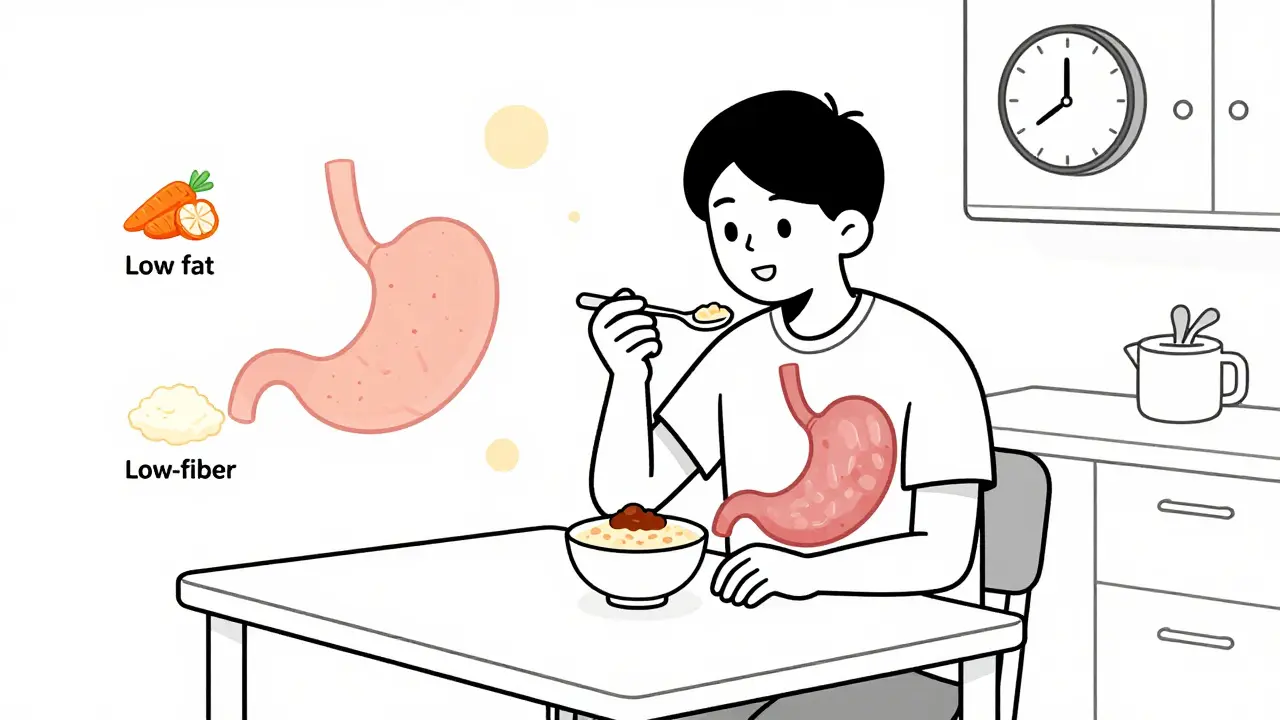
When your stomach won’t empty properly, eating becomes a chore - not a pleasure. Gastroparesis isn’t just feeling full too fast. It’s when food sits in your stomach for hours, sometimes days, without moving into your small intestine. No blockage. No tumor. Just your stomach muscles not doing their job. And it’s more common than you think. Around 4% of people have it, with women four times more likely to be affected than men. If you’ve been told your nausea and bloating are "just stress," but nothing helps - this might be why.
What Exactly Is Gastroparesis?
Gastroparesis means "paralyzed stomach." It’s not a single disease, but a symptom of something going wrong with how your stomach moves food. Normally, after you eat, your stomach relaxes to hold the meal, then contracts in waves to grind food into a thin slurry. That slurry should slowly empty into the small intestine over two to four hours. In gastroparesis, that process slows down - sometimes so much that less than 40% of a meal leaves the stomach after two hours.
The most common cause? Nerve damage. Specifically, the vagus nerve, which tells your stomach when and how to contract. Diabetes is the biggest offender. Up to half of people with type 1 diabetes and 30% of those with long-term type 2 diabetes develop it. But about one-third of cases have no known cause - called idiopathic gastroparesis. Surgery, especially stomach or esophageal procedures, can also damage the nerve. Autoimmune conditions like scleroderma and certain medications (like opioids and some antidepressants) play a role too.
Symptoms don’t show up overnight. They creep in. You start feeling full after just a few bites. Nausea becomes a daily companion. Vomiting undigested food hours after eating? That’s classic. Bloating, belching, heartburn, and abdominal pain follow. For many, symptoms last longer than three months before they’re taken seriously. And it’s not just physical. Seventy-five percent of patients say it limits their daily life. Forty percent can’t keep a full-time job. The emotional toll is real - 65% report anxiety around meals, and half avoid social events because they can’t predict how they’ll feel afterward.
How Is It Diagnosed?
You can’t diagnose gastroparesis with a blood test. Doctors need proof that food is sitting in your stomach too long. The gold standard is a gastric emptying scan. You eat a meal with a tiny bit of radioactive material, then lie under a camera that tracks how fast it leaves your stomach. If less than 40% is gone after two hours, you meet the diagnostic criteria.
But here’s the catch: symptoms don’t always match the scan. Some people with severe symptoms have only mildly delayed emptying. Others with very slow emptying feel fine. That’s why doctors also look at your history - how long symptoms lasted, what you eat, whether you have diabetes, and if other conditions have been ruled out. Conditions like gastric outlet obstruction (a physical blockage) or cyclic vomiting syndrome can mimic gastroparesis, so they have to be checked first.
Stomach emptying tests aren’t perfect. Newer methods are being tested, like breath tests and AI-powered analysis of traditional scans. These could make diagnosis faster and more accurate in the next few years.
Why Diet Is the First Line of Defense
Medications help - but not for everyone. And they come with risks. That’s why experts agree: diet comes first. In fact, 65% of patients see major symptom improvement just by changing what and how they eat. No drugs. No surgery. Just smarter food choices.
The goal? Reduce the workload on your stomach. Smaller particles = easier to move. Less fat = faster emptying. Less fiber = less resistance. Less volume = less pressure.
Here’s what works, based on real patient outcomes:
- Small meals, 5-6 times a day. One cup of food per meal - no more. A full plate? That’s too much. Think snacks you can eat in five minutes.
- Low fat. Fat slows gastric emptying by 30-50%. Avoid fried foods, creamy sauces, butter, cheese, and fatty meats. Aim for less than 3 grams of fat per meal.
- Low fiber. Fiber doesn’t break down. It sits. Avoid raw vegetables, whole grains, nuts, seeds, and skins on fruits. Stick to peeled, cooked, and blended foods.
- Blend it. If solid food triggers symptoms, try blending meals into a smooth texture. Particle size should be under 2mm. That’s the consistency of applesauce or thin soup. Seventy percent of patients who do this report big improvements.
- Avoid carbonation. Soda, sparkling water, and even beer add gas to your stomach. That distends it and makes bloating worse. Stick to still water or herbal teas.
- Separate liquids and solids. Drink 30 minutes after eating, not during. Mixing liquids with solids increases stomach volume by 40%, which overwhelms a weak stomach.
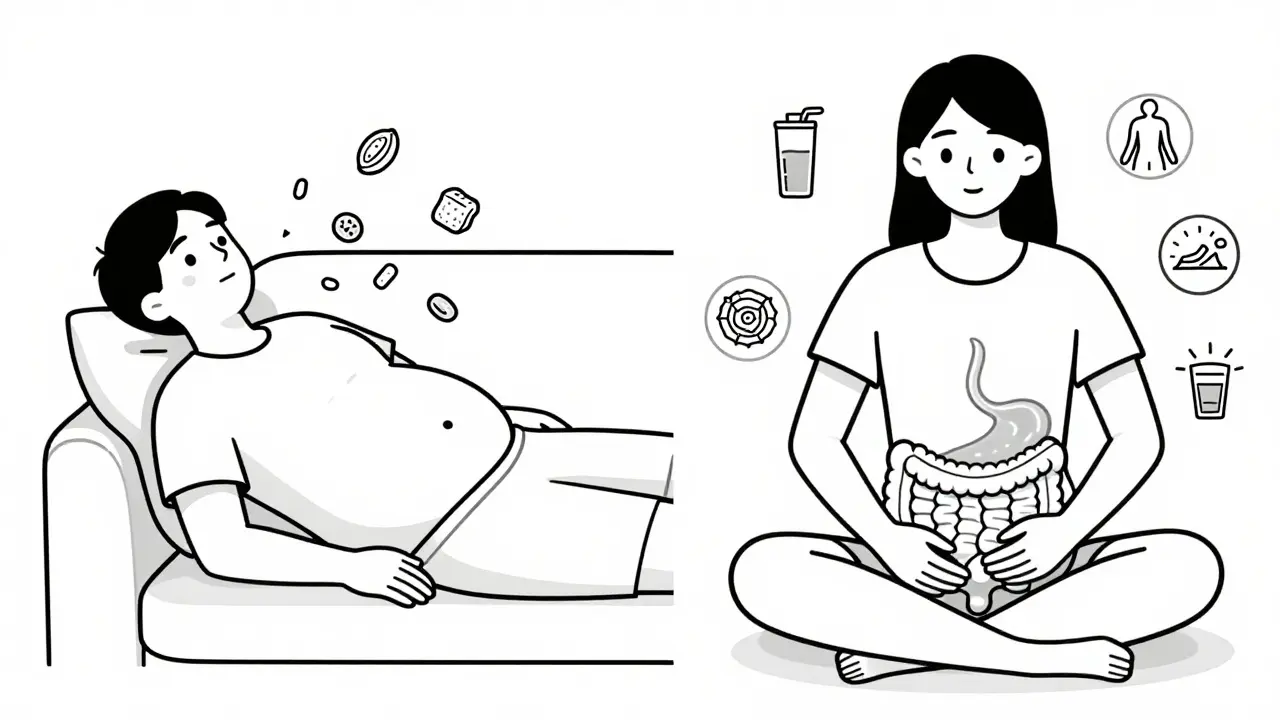
- Stay upright. Sit or stand for at least two hours after eating. Lying down lets food pool in the stomach.
Hydration matters too. Sip 1-2 ounces of water every 15 minutes throughout the day. Chugging a bottle at once? That’s like pouring a gallon into a clogged pipe. It just backs up.
What to Eat - Real Examples
Forget vague advice like "eat soft foods." Here’s what a day of eating actually looks like for someone managing gastroparesis:
- Breakfast: Scrambled eggs (no butter), blended oatmeal made with water (not milk), peeled apple sauce, and a small cup of weak tea.
- Mid-morning snack: Low-fat yogurt (check labels - less than 1g fat), blended banana.
- Lunch: Chicken broth with shredded chicken (finely chopped), mashed sweet potato (peeled and blended), steamed carrots (cooked until mushy).
- Afternoon snack: Applesauce, a few saltine crackers (low-fiber), and sips of water.
- Dinner: Blended lentil soup (strained, no chunks), ground turkey meatballs (baked, no breading), mashed zucchini.
- Evening: Herbal tea (chamomile or peppermint), no food after 8 p.m.
Meal prep is key. Cook in batches. Blend. Portion into containers. Freeze. Then reheat as needed. This isn’t about gourmet meals - it’s about consistency. And it works. Sixty percent of people see over 50% symptom reduction within 8-12 weeks.
When Diet Isn’t Enough
Some people need more. If you’re still vomiting, losing weight, or getting dehydrated despite diet changes, it’s time to talk about other options.
Medications: Metoclopramide can help the stomach contract better - but it’s risky. Long-term use can cause irreversible movement disorders. Domperidone (not FDA-approved in the U.S.) is safer but hard to get. Erythromycin is another option, but tolerance builds quickly. These are tools, not cures.
Gastric Electrical Stimulation (GES): A pacemaker-like device implanted in the stomach sends pulses to help it contract. It doesn’t fix emptying, but it reduces vomiting by over 50% in 70% of patients who don’t respond to meds. It’s not for everyone - only those with severe, chronic symptoms.
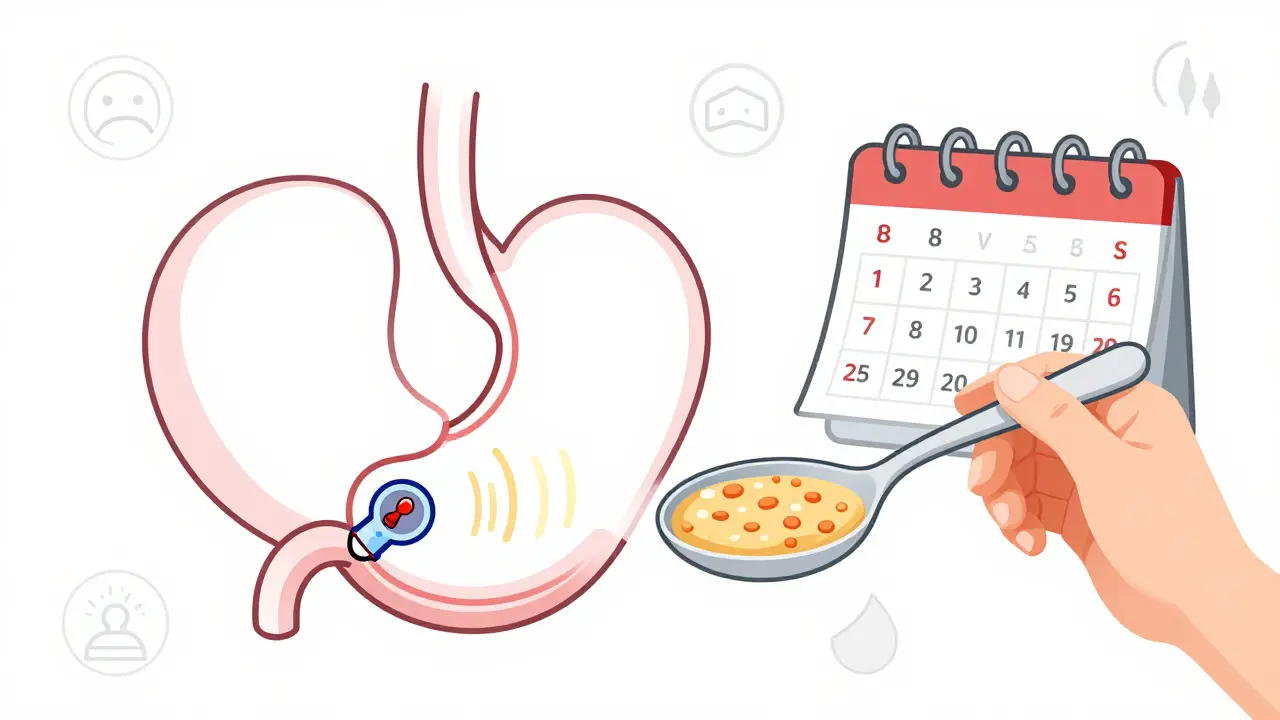
Endoscopic Procedures: A newer option is per-oral pyloromyotomy (POP). A scope is used to cut the muscle at the bottom of the stomach (the pylorus), which reduces resistance. Early results show 60-70% of patients feel much better.
Feeding Tubes: If you’re losing weight or can’t get enough nutrition, a tube into the small intestine (jejunostomy) bypasses the stomach entirely. Total parenteral nutrition (IV feeding) is a last resort - used in only 10-15% of severe cases.
Complications You Can’t Ignore
Gastroparesis doesn’t just make you feel bad - it can make you sick. Left untreated, it leads to serious problems:
- Bezoars: Undigested food clumps into solid masses. They can block the stomach. About 6% of patients get them - and 2% need surgery to remove them.
- Malnutrition: 30-40% of chronic cases involve weight loss over 10% of body weight. Protein and calorie intake often drop too low.
- Dehydration and electrolyte imbalance: Vomiting pulls out potassium, sodium, and chloride. This can cause dizziness, muscle cramps, and even heart rhythm problems.
- Blood sugar chaos: For diabetics, delayed emptying means unpredictable spikes and crashes. Insulin doses become a guessing game. This makes diabetes harder to control - and vice versa.
That’s why regular check-ins with a gastroenterologist and a registered dietitian are critical. Working with a dietitian who specializes in gastroparesis improves outcomes by 40% compared to going it alone.
What’s Next? Hope on the Horizon
The field is moving fast. In 2022, the FDA approved relamorelin - a drug that mimics a natural gut hormone and speeds up emptying by 35% in trials. New prokinetics without serious side effects are expected in the next 2-3 years. AI tools are being tested to analyze gastric scans faster and more accurately. Researchers are even looking at the gut microbiome - early studies show certain probiotics reduce symptoms by 30%.
But the biggest breakthrough? Personalization. Experts now recognize three subtypes of gastroparesis - some with mostly nausea, others with pain or bloating. Soon, treatment won’t be one-size-fits-all. It’ll be matched to your symptoms, your triggers, and your body.
Final Thoughts: You’re Not Alone
Gastroparesis is not your fault. It’s not laziness. It’s not "just anxiety." It’s a real, measurable condition that affects your body’s ability to process food. The good news? You can take control. Start with diet. Track what you eat and how you feel. Talk to a dietitian. Don’t wait until you’re hospitalized.
One woman in Sydney, diagnosed five years ago, told me: "I thought I’d never eat pizza again. Now I blend cauliflower crust into soup. I still eat. I still live. It’s not perfect - but it’s enough."
It’s not about perfection. It’s about progress. One small meal at a time.
Can gastroparesis go away on its own?
In rare cases, especially after surgery or viral illness, gastroparesis can improve over time. But for most people - especially those with diabetes - it’s a chronic condition. That doesn’t mean it’s untreatable. With the right diet and care, symptoms can be controlled for years. The goal isn’t necessarily to cure it, but to live well with it.
Is a liquid diet the only option?
No. Many people do well with soft, blended, or well-cooked solid foods. The key is texture - not whether it’s liquid. Pureed meals, smooth soups, and finely ground meats often work better than strict liquid diets. Most patients don’t need to rely on shakes long-term unless they’re severely malnourished.
Can I still eat fruit and vegetables?
Yes - but not raw. Cooked, peeled, and blended produce is usually fine. Think applesauce, mashed carrots, blended spinach in soups. Avoid skins, seeds, and fibrous parts like broccoli stems or apple cores. Bananas and melons are often well-tolerated when blended.
Why do some people with diabetes get gastroparesis and others don’t?
It’s not just about how long you’ve had diabetes - it’s about blood sugar control. People with frequent highs and lows, especially over many years, are at higher risk. Nerve damage builds slowly. Good glucose management doesn’t guarantee prevention, but it lowers the risk significantly. Genetics and other factors also play a role.
Should I avoid all fiber?
Not all fiber - just insoluble fiber. That’s the kind in whole grains, nuts, seeds, raw veggies, and fruit skins. It doesn’t dissolve and can form blockages. Soluble fiber (like oats, peeled apples, and blended beans) is usually better tolerated. But even soluble fiber should be limited to under 15 grams per day.
Can alcohol make gastroparesis worse?
Yes. Alcohol slows digestion, dehydrates you, and can irritate the stomach lining. Even small amounts can trigger nausea or delay emptying further. Most experts recommend avoiding alcohol entirely. If you do drink, limit it to a tiny amount and never on an empty stomach.
How long does it take to see results from diet changes?
Most people notice improvement in 4-6 weeks. Significant change - like less vomiting or being able to eat without pain - often happens by 8-12 weeks. Consistency matters more than perfection. Stick with the plan even if results aren’t instant.



9 Comments