

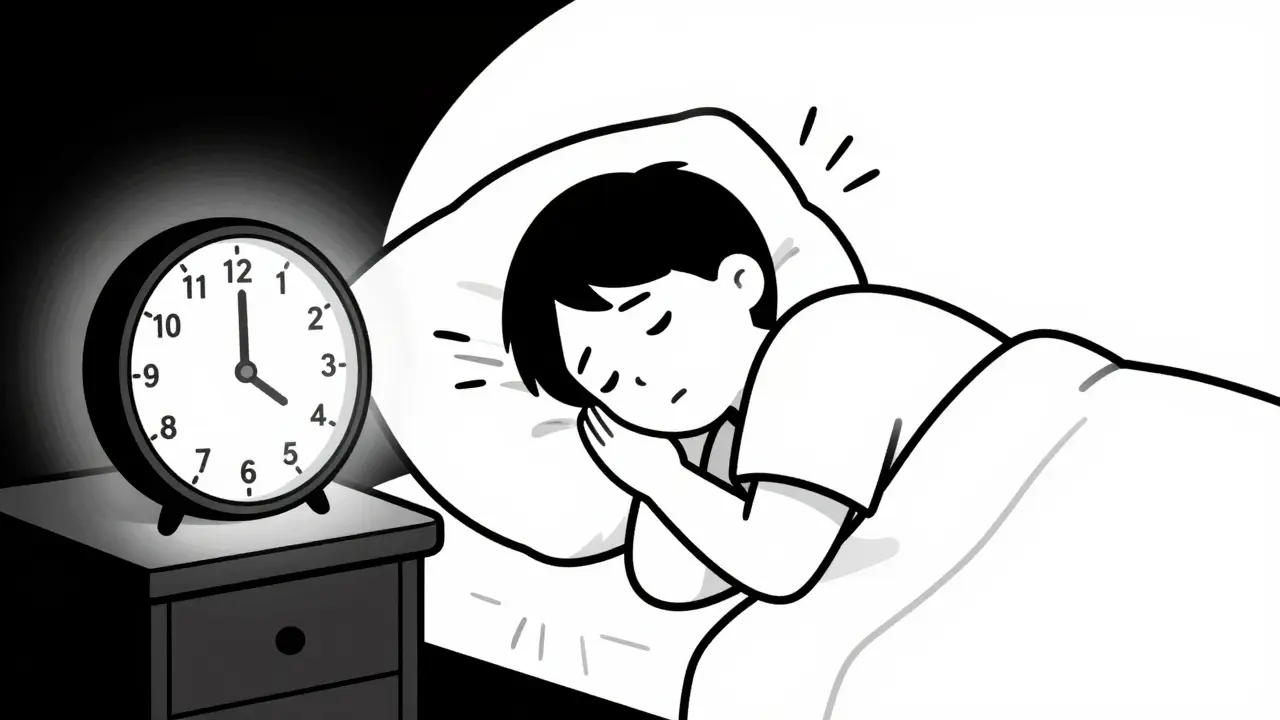
Staring at the ceiling while the clock ticks toward 3 AM is exhausting. You know the drill: the anxiety builds, the mind races, and you wonder if another sleeping pill is the only way out. But relying on medication usually creates a dependency loop rather than fixing the root cause. There is a better path that treats the actual disorder instead of masking the symptoms. Clinical evidence shows that specific behavioral methods can reset your brain's sleep drive permanently.
This guide breaks down exactly how to fix chronic insomnia using behavioral science instead of chemistry. We will move through the exact steps, why they feel counterintuitive initially, and how to stick with them long enough to see results.
What You Need to Know
- Cognitive Behavioral Therapy for Insomnia (CBT-I) is the gold standard recommended by the American College of Physicians over medication for chronic sleep issues.
- The core process involves restricting time in bed to increase sleep pressure, retraining your brain to associate the bed only with sleep, and challenging negative thoughts about sleep.
- Research from 2023 indicates digital versions of these therapies provide similar outcomes to seeing a therapist in person, making access easier.
- You should expect some initial fatigue as your body adjusts, but sleep quality typically improves significantly within 3 to 6 weeks.
- Maintaining a consistent wake-up time is arguably the single most critical component for success, regardless of how much sleep you got the night before.
Understanding the Approach
Many people view sleep as something that just happens automatically. For those suffering from chronic insomnia, however, sleep has become an activity filled with effort and worry. Cognitive Behavioral Therapy for Insomnia, also known as CBT-I, is designed to break this cycle. Unlike sleep aids that chemically induce unconsciousness, this therapy retrains the neural pathways responsible for sleep-wake cycles.
Developed through research spanning decades, this method targets the behaviors that perpetuate wakefulness. If you spend too many hours lying awake in bed, your brain eventually associates the mattress with alertness rather than rest. By systematically changing how you interact with sleep, you restore the natural physiological drive to close your eyes. Dr. Jack D. Edinger, a leading expert cited in NIH publications, notes that this approach produces results equivalent to medication but without the risk of side effects or tolerance buildup.
The goal isn't just to get eight hours tonight; it is to build skills that prevent relapse when stress inevitably returns later in life. This distinction is vital. Medications manage the symptom temporarily, whereas behavioral strategies address the mechanism of the problem.
The Engine of Change: Sleep Restriction
Here is the trickiest part to accept but the most powerful tool available: Sleep Restriction Therapy is a deliberate strategy to limit your time in bed to match your actual sleep duration.
If you have been spending ten hours in bed but only sleeping five, your sleep efficiency is poor. Your body learns to expect wakefulness during those extra five hours. Sleep restriction fixes this mismatch by creating mild, calculated sleep deprivation. When you finally are allowed in bed, your sleep drive is strong enough to pull you under quickly and keep you there.
To implement this effectively:
- Track your average sleep time: Look at your last week's sleep diary. If you averaged five hours of actual sleep across three days, set your window to five and a half hours initially.
- Set a strict wake-up time: Wake up at 7:00 AM every day, even on weekends. Do not nap during the day. This builds "sleep hunger" for the evening.
- Shift bedtime gradually: Only go to bed when you feel genuinely sleepy. If your window is five and a half hours and you wake at 7:00 AM, your bedtime becomes 1:30 AM. Once you consistently fall asleep easily, add 15 minutes to the window every few days until you reach a healthy duration.
You might feel tired for the first few days. Studies show patients often experience reduced sleep time initially, sometimes losing 30 to 60 minutes, as their schedule stabilizes. This is temporary. As soon as your efficiency climbs above 85%, the restriction is lifted, and you start sleeping longer within a consolidated block of time.
Resetting Bedroom Associations
Your bed should trigger immediate drowsiness, not frustration. Stimulus Control Therapy focuses on eliminating activities that weaken this connection.
Most people make the mistake of staying in bed while scrolling through phones, reading work emails, or worrying about tomorrow's schedule. These actions tell your brain that bed is a place for doing, not resting. You need to reclaim the bed as a sanctuary.
Follow these rules strictly:
- No screens: Put away laptops, tablets, and TVs. Blue light suppresses melatonin, further disrupting circadian rhythms.
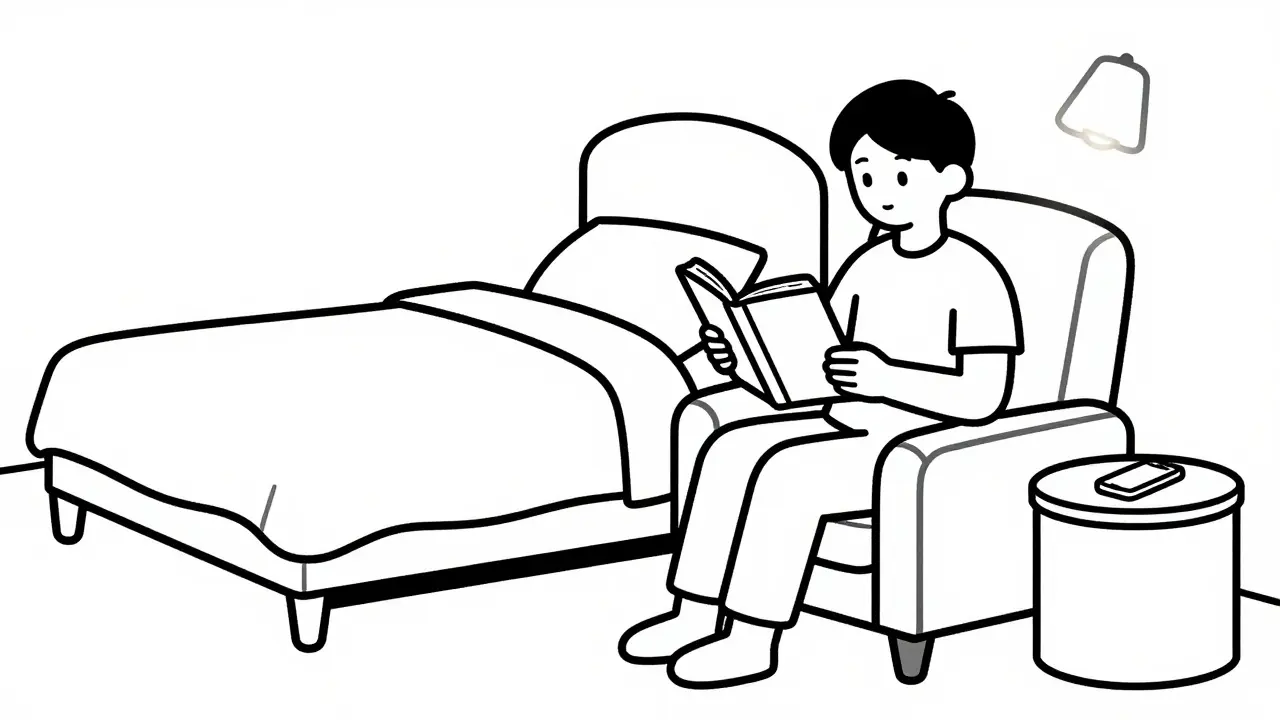
- The 20-Minute Rule: If you haven't fallen asleep after 20 minutes (roughly), get out of bed. Go to another room. Do something boring in dim light, like reading a paper book. Return only when sleepy.
- No Napping: Absolutely no daytime napping. If you are exhausted during the day, resist the urge to lie down. This ensures you are ready to sleep when bedtime arrives.
This discipline is difficult initially because it feels counterintuitive to deny yourself rest when tired. However, research published in the Kosin Medical Journal confirms stimulus control remains effective even years after treatment ends. It is one of the strongest predictors of long-term success.
Quiet the Mind Through Cognitive Work
Often, insomnia is fueled by catastrophic thinking. Thoughts like "I'll never sleep again" or "I won't function tomorrow" create adrenaline spikes that make sleep impossible. Cognitive restructuring teaches you to identify these errors and replace them with balanced thoughts.
Instead of trying to force sleep, focus on acceptance. Worrying keeps the amygdala active. Progressive muscle relaxation or diaphragmatic breathing activates the parasympathetic nervous system, physically calming the body. While these techniques alone are weak for treating chronic insomnia, they support the behavioral changes by reducing the anxiety surrounding the act of sleeping.
Is It Effective Compared to Meds?
It is common to wonder if this takes as long as a sleeping pill works immediately. Pills act fast, often within an hour, but the effect diminishes as soon as you stop taking them. Behavioral therapy takes a bit longer but the change sticks. A major study published in JAMA Network Open in 2023 compared digital therapy against medication.
| Treatment Type | Initial Impact (Weeks 1-4) | Long-Term Results (6 Months) | Side Effects |
|---|---|---|---|
| Sleeping Medication | Fast onset (high satisfaction early) | Effects fade upon stopping | Drowsiness, dependence, balance issues |
| CBT-I Techniques | Requires discipline (temporary fatigue) | Improvements sustained and often grow stronger | Minimal to none |
| Combination | Best immediate relief | Best overall outcome | Dependent on med usage |
According to the 2023 data, digital therapy showed a response rate of 77.30% at one month, which held steady. Medication improved symptoms initially but failed to maintain gains once stopped. The real advantage here is durability. You build a skill set that lasts, unlike chemical management.
Getting Started Today
You don't necessarily need to wait for a specialist to begin. You can track your sleep patterns starting tonight. Grab a notebook and record your bedtime, estimated sleep onset, number of awakenings, and final wake time. After two weeks, calculate your total time in bed versus actual sleep. This data drives the sleep restriction phase.
If you prefer guidance, look for certified behavioral sleep medicine specialists or reputable digital platforms. With the market shifting towards digital therapeutics, apps delivering FDA-cleared protocols are now widely covered by insurance and Medicare. This increases accessibility significantly compared to traditional in-person therapy, which often faces provider shortages.
Expect a learning curve. Adherence is the main barrier. Many patients struggle to keep the same wake time on weekends. Consistency is the secret weapon here. The body loves routine, and your circadian rhythm thrives on predictability.
Frequently Asked Questions
How long does CBT-I take to work?
While some improvements happen within 2 to 3 weeks, the full protocol usually spans 6 to 8 sessions. Most patients report significant shifts in sleep quality after completing the initial sleep restriction phase.
Can I combine CBT-I with sleep medication?
Yes, combination therapy is often effective for immediate relief. However, doctors recommend tapering off medication as you learn CBT-I skills to avoid dependency.
What if I get too tired during sleep restriction?
This is normal and temporary. Safety comes first-avoid driving if dangerously fatigued-but generally, the increased sleep pressure will help you sleep deeply during your restricted window.
Does sleep hygiene work on its own?
Sleep hygiene (like dark rooms and cool temperatures) supports the process but rarely cures chronic insomnia alone. It should be used as a baseline alongside the core CBT-I components.
Will I lose weight doing this?
Better sleep helps regulate hormones controlling hunger, potentially aiding weight stability, but the primary focus of this therapy is restoring healthy sleep architecture.




15 Comments