Every year, millions of people around the world take medications they think are safe-only to find out later they were given fake or damaged pills. Counterfeit drugs don’t just fail to work; they can poison you. A fake antibiotic might make your infection worse. A counterfeit insulin could send your blood sugar into a deadly tailspin. The problem isn’t rare. The World Health Organization says 1 in 10 medicines in low- and middle-income countries are fake or substandard. Even in places like the U.S. and Australia, counterfeit drugs show up online, in shady pharmacies, or through stolen supply chains.
But here’s the good news: reporting a suspicious medication can save lives. When you report a fake pill, you’re not just protecting yourself-you’re helping health agencies pull dangerous products off shelves before they hurt someone else. The FDA removed over 2,300 counterfeit drug products between 2015 and 2022 because people like you spoke up. This guide shows you exactly how to report counterfeit or tampered medications-no matter who you are.
What Counts as a Counterfeit or Tampered Medication?
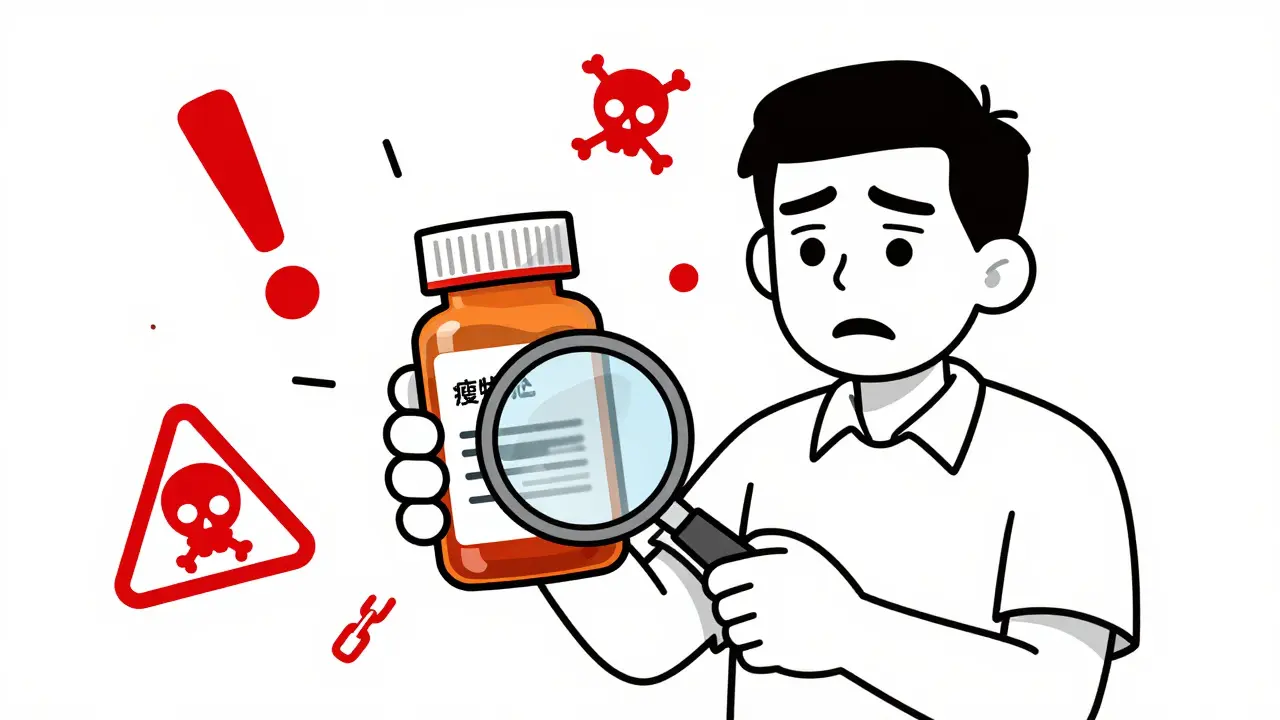
Not every odd-looking pill is fake. But some signs are red flags you can’t ignore:
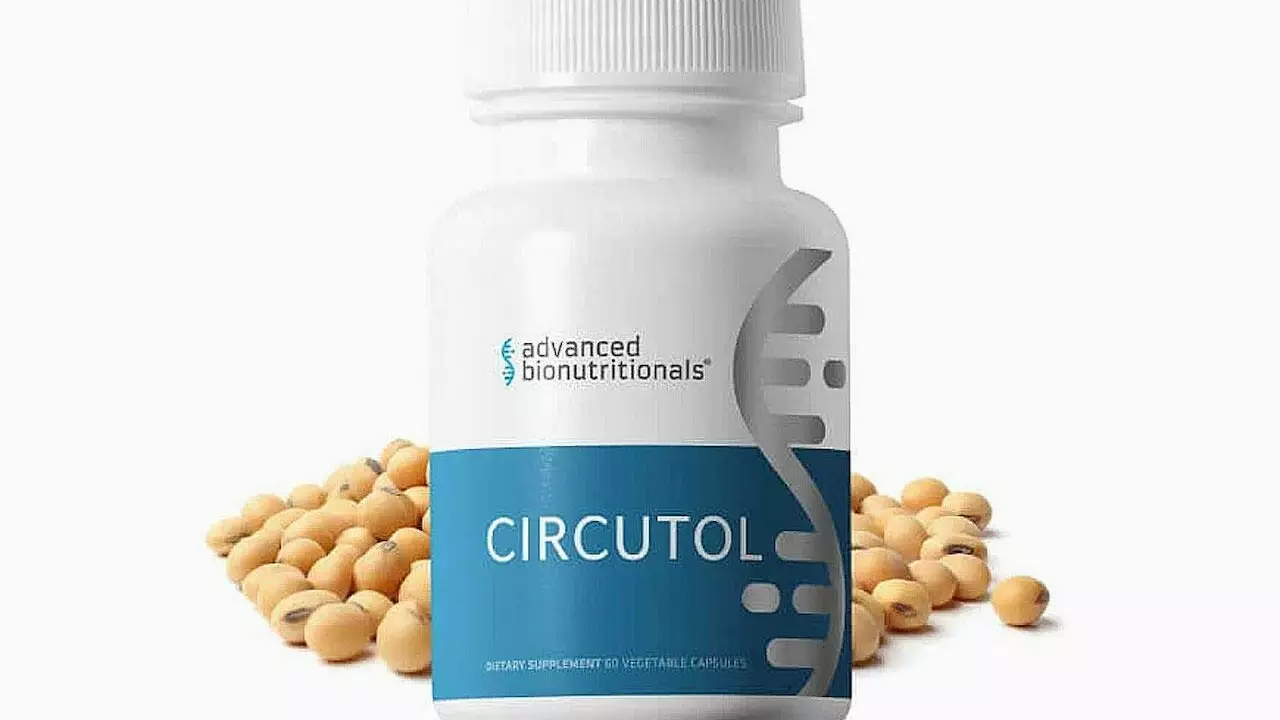
- Packaging that looks blurry, has misspelled words, or doesn’t match the brand you’ve used before
- Pills that are a different color, shape, or size than usual
- Medication that doesn’t work the way it should-like painkillers that don’t relieve pain or insulin that doesn’t lower blood sugar
- Expiration dates that are smudged, scratched out, or don’t match the batch number
- Broken or missing tamper-evident seals (like the foil under the cap or the shrink wrap)
- Purchase from an online pharmacy that doesn’t require a prescription, or from a street vendor, social media seller, or unmarked website
The FDA defines counterfeit drugs as those deliberately mislabeled to look real. Tampered meds are real products that someone opened, altered, or resealed-maybe to add something dangerous, remove active ingredients, or refill with cheaper stuff. Both are dangerous. And both need to be reported.
What to Do Before You Report
Don’t throw the medication away. Don’t swallow it. Don’t flush it. Keep it exactly as you found it.
Here’s what to gather before you report:
- The actual pill or liquid-don’t touch it more than necessary
- The original packaging, box, bottle, and instructions
- The receipt or proof of purchase (even a screenshot of an online order)
- Photos of the product from all angles: front, back, label, cap, seal, batch number, expiration date
Take clear photos. Zoom in on the batch number and expiration date. These details are critical. According to Dr. Paul Newton from Oxford University, reports with batch numbers and high-res photos are 68% more likely to lead to a successful investigation. Don’t skip this step.
How to Report in the United States
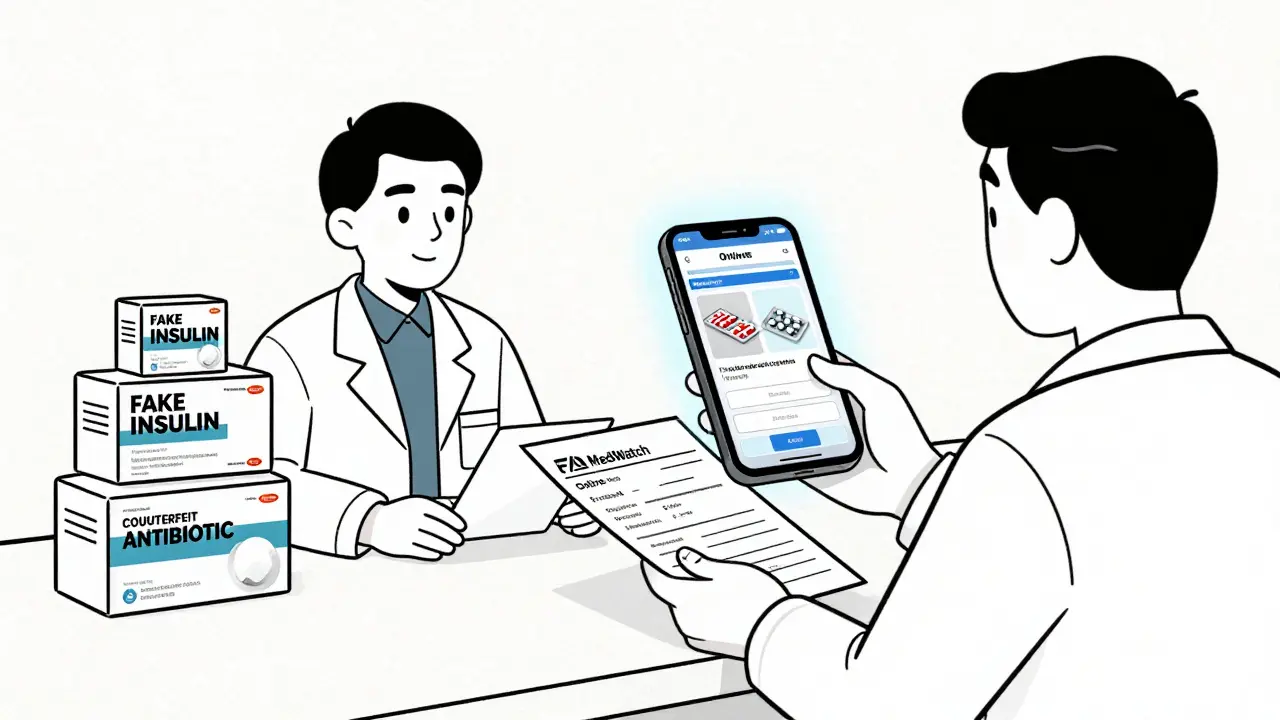
If you’re in the U.S., the main way to report is through the FDA’s MedWatch program. It’s free, confidential, and available to anyone-patients, pharmacists, doctors, or just someone who bought something suspicious.
Option 1: Online Form (Fastest)
Go to fda.gov/medwatch and download Form 3500. Fill it out with:
- Your contact info (you can report anonymously)
- Product name (brand and generic)
- Manufacturer name and address
- Batch or lot number
- Expiration date
- Where you bought it
- What you noticed was wrong
- Upload your photos
Submit it online. You’ll get a confirmation number. Keep it.
Option 2: Phone
Call 1-800-FDA-1088 (1-800-332-1088). An agent will walk you through the details. This is helpful if you’re not comfortable filling out forms. The FDA says consumer reports take 12-15 minutes to complete.
Option 3: For Healthcare Professionals
If you’re a doctor, nurse, or pharmacist, you’re legally required to report serious product issues. Use Form 3500A, which includes more clinical details. You can also report through your hospital’s adverse event system-but don’t skip MedWatch. The FDA needs direct reports from the public to catch counterfeit products early.
How to Report in Canada
In Canada, reporting depends on what kind of drug you’re dealing with.
For controlled substances (like opioids, Adderall, Xanax)
If you suspect a forged prescription or a stolen controlled drug, contact Health Canada’s Office of Controlled Substances. You have 10 days to report if the drug was dispensed. Use their guidance document CS-GD-005. Pharmacists must report theft or loss immediately.
For prescription fraud in Ontario
If you’re a pharmacist in Ontario and spot a fake prescription, email [email protected] with:
- The prescriber’s name, address, phone
- The drug name and quantity
- A copy of the prescription
For other counterfeit medications, use Health Canada’s MedEffect Canada online form. It’s similar to MedWatch and accepts reports from patients and providers.
What About Online Pharmacies?
Over 96% of online pharmacies selling drugs without a prescription are illegal, according to the National Association of Boards of Pharmacy. Amazon, eBay, Facebook Marketplace, and shady websites are common sources of fake pills.
Amazon has a Report Counterfeit Product tool. Go to your order history, find the item, click “Report item,” and select “Counterfeit.” Amazon says it received over 7,800 pharmaceutical reports in 2022-up 37% from the year before.
But don’t stop there. Report the same product to the FDA or Health Canada too. Online platforms can remove listings, but only regulators can pull the product from all channels and track where it came from.
What If You’re a Pharmacist or Supply Chain Worker?
If you work in a pharmacy, warehouse, or distribution center, you’re under legal obligations under the Drug Supply Chain Security Act (DSCSA) in the U.S. or similar rules in Canada.
U.S. Requirements (DSCSA)
If you discover a product is illegitimate-whether it’s counterfeit, stolen, or tampered-you must notify the FDA within 24 hours. Use the 3911 platform in CDER NextGen. If you can’t access that, email Form FDA 3911 to [email protected].
Include:
- Product name, NDC code, batch number
- Where you got it
- Why you think it’s illegitimate
- Any photos or lab results
Compliance among manufacturers is high-98.7% in 2022. But only 82% of wholesale distributors reported on time. Late reports delay investigations and put lives at risk.
Canada
Pharmacists must report theft or loss of controlled substances to Health Canada within 10 days. Use the CS-GD-005 template. For non-controlled counterfeit drugs, report through MedEffect Canada.
What Happens After You Report?
Don’t expect a call the next day. The FDA doesn’t have the staff to respond to every report personally. But your report goes into a national database that helps them spot patterns.
Here’s what usually happens:
- Within 48 hours: Your report is logged and assigned a tracking number
- Within 7 days: If multiple reports come in about the same batch, the FDA may issue a public alert
- Within 14 days: If the product is confirmed fake, it’s removed from the supply chain
Reports submitted within 24 hours of discovery lead to product removal 4.2 times faster than those submitted after 72 hours. Speed matters.
But here’s the hard truth: not everyone gets a follow-up. The FDA’s 2022 survey found only 56% of consumers were satisfied with communication after reporting. Many felt ignored. That’s why it’s critical to keep your confirmation number and follow up if you don’t hear back in 2 weeks.
Other Reporting Channels
You don’t have to rely on just one system.
- DEA RxAbuse Tip Line: Call (571) 324-6499 or report online at dea.gov. This is best for suspected drug diversion, forged prescriptions, or illegal online sales. The DEA says 73% of successful investigations in San Diego started with a public tip.
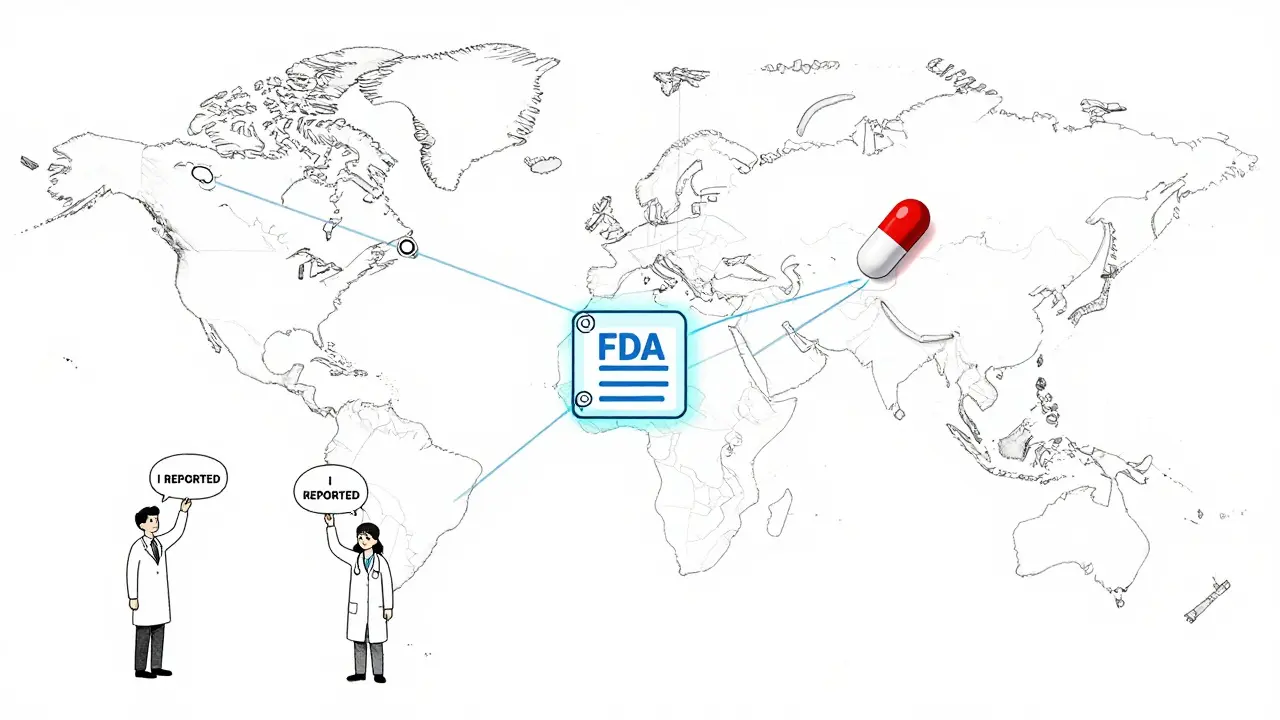
- WHO Global Surveillance System: If you’re outside the U.S. or Canada, report through your national health agency. They forward reports to WHO. As of 2022, they’ve documented over 1,500 cases across 141 countries.
- Manufacturer Direct: Companies like Novo Nordisk and Eli Lilly have anti-counterfeiting teams. If you bought insulin or cancer drugs, contact the manufacturer directly. They can trace the batch and warn others.
Why Your Report Matters
Counterfeit drugs are a $205 billion global problem. They’re not just a scam-they’re a public health crisis. A fake malaria drug killed a child in Nigeria in 2022. A counterfeit heart medication caused heart attacks in the U.S. in 2021.
Every report you make adds to a safety net. It helps regulators track where fakes are coming from. It helps law enforcement shut down illegal labs. It helps manufacturers improve packaging and tracking.
And it gives others a chance to avoid the same danger. If you report a fake Adderall, someone else won’t take it. If you report a broken insulin pen, a diabetic won’t risk their life.
You don’t need to be a doctor. You don’t need to be an expert. You just need to care enough to speak up.
What Not to Do
Don’t:
- Take the medicine anyway, hoping it’ll work
- Throw it in the trash-hazardous waste rules apply
- Give it to a friend who needs it
- Post it on social media with a rant-this can spread misinformation
- Wait to report because you’re not sure
If you’re unsure, report anyway. The FDA would rather get 10 false alarms than miss one real threat.
What’s Changing in 2025?
Reporting is getting faster. The FDA is testing a smartphone app that lets you take a photo of a pill and automatically pulls the batch number, expiration date, and manufacturer info. In tests, it cut reporting time from 14 minutes to under 4 minutes.
By 2027, global health agencies aim to connect all reporting systems so a fake drug reported in Australia shows up in the U.S. database instantly. That’s the future-and your report today helps build it.
Don’t wait. If something feels wrong about your medication, trust your gut. Take the photos. Save the box. Report it. Someone’s life might depend on it.