

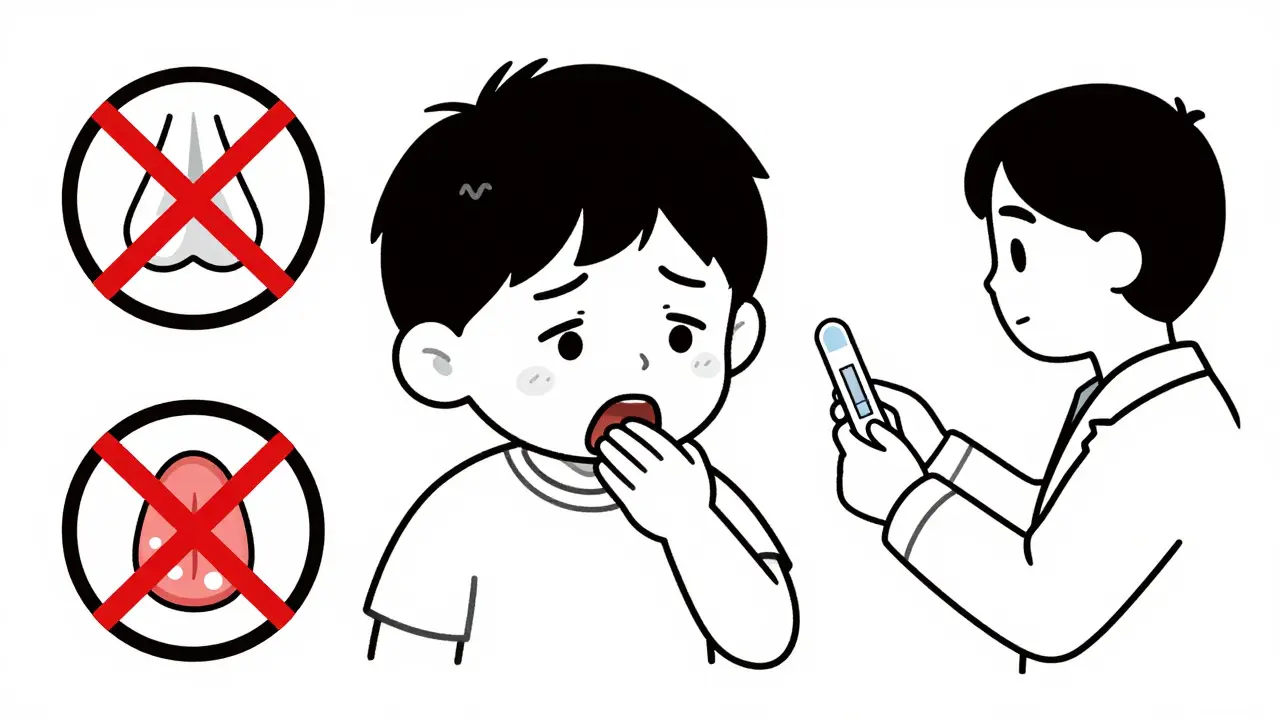
Strep throat isn’t just a bad sore throat. It’s a bacterial infection caused by Group A Streptococcus (Streptococcus pyogenes), and if left untreated, it can lead to serious problems like rheumatic fever - a condition that can permanently damage heart valves. Unlike viral sore throats, which come with coughs and runny noses, strep throat hits fast and hard, with no sneezing or congestion. That’s the key clue.
How Do You Know It’s Strep and Not Just a Cold?
If you or your child suddenly has a very sore throat, fever over 100.4°F (38°C), and swollen tonsils with white patches, it’s worth getting checked. Cough? Runny nose? Conjunctivitis? If yes, it’s probably a virus. Strep throat typically doesn’t come with those. In fact, the absence of a cough is one of the strongest indicators - it’s 90% specific for bacterial infection.
Doctors use a simple scoring system called the Centor criteria to estimate the chance of strep. You get one point each for:
- Absence of cough
- Fever above 100.4°F (38°C)
- Tender lymph nodes in the front of your neck
- Tonsil swelling or white patches
If you score 3 or higher, there’s a 40-60% chance you have strep. That’s when testing becomes necessary. Kids aged 3 to 9 are most at risk - they make up 15-30% of all sore throat cases in that age group. Adults get it too, but only about 5-15% of adult sore throats are strep. Kids under 3 almost never get it - their immune systems just don’t react the same way.
Testing: Rapid Test, Culture, or PCR?
There are three main ways to confirm strep throat. The first is the rapid antigen detection test (RADT). It’s fast - results in 10 to 30 minutes - and about 95% accurate at ruling out strep if it’s negative. But it can miss 5-15% of cases, especially in younger kids who carry less bacteria. That’s why guidelines say: if a child or teen tests negative on a rapid test, they need a throat culture.
The throat culture is the gold standard. It takes 18 to 48 hours to get results, but it catches almost all cases - 90-95% sensitivity. It’s slow, but reliable. In urgent care centers and hospitals, many are now switching to molecular PCR testing. It’s even more sensitive (95-98%) and gives results in 24 to 48 hours. It’s pricier, but it’s becoming more common.
The CDC recommends RADT as the first test for anyone with symptoms. For adults with low Centor scores and a negative test, further testing isn’t needed. For kids? Always follow up with a culture if the rapid test is negative. Missed cases in children carry a higher risk of rheumatic fever.
Antibiotics: What Works and What Doesn’t
Antibiotics don’t just make you feel better faster - they stop you from spreading the infection and prevent serious complications. If you have strep, you’ll be prescribed one of three first-line options:
- Penicillin V - 500 mg twice a day for adults, 250 mg twice a day for kids. Takes 10 days.
- Amoxicillin - Often preferred for kids because it tastes better. Dose is 50 mg/kg once daily (up to 1000 mg), or 25 mg/kg twice daily (up to 500 mg per dose). Also 10 days.
- Cephalexin - For those allergic to penicillin. 20 mg/kg twice daily (up to 500 mg per dose).
If you’re allergic to penicillin and can’t take cephalexin, alternatives include clindamycin or azithromycin. But these are less effective - only 85-90% eradication rate compared to 95% for penicillin or amoxicillin. Resistance is rising for azithromycin in some areas - up to 15% in parts of the U.S.
Penicillin remains the most reliable. Resistance is extremely low - just 0.5%. That’s why it’s still the first choice worldwide. A 2023 NEJM study showed patients who finished their full 10-day course had a 99% success rate. Those who stopped early? Only 85% eradication. Relapse is real.
Recovery Timeline: What to Expect
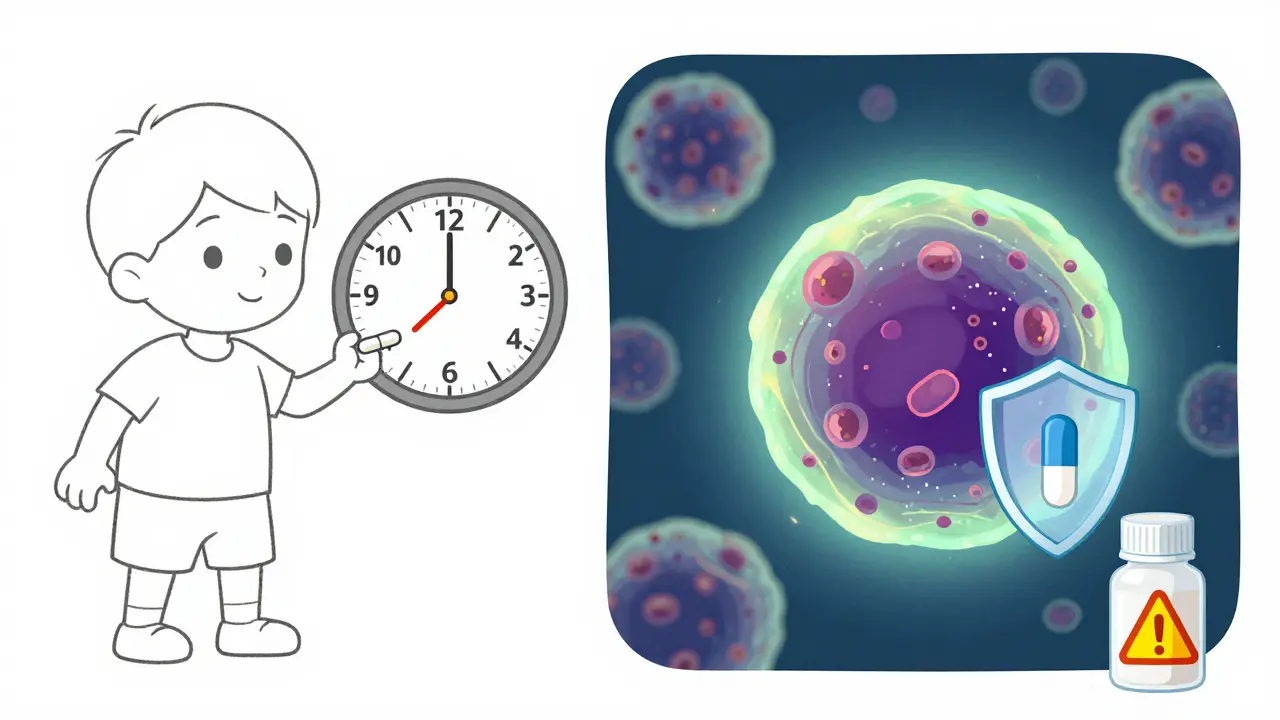
With antibiotics, most people start feeling better within 24 to 48 hours. Fever drops, swallowing gets easier, and the throat pain eases. But don’t stop the medicine just because you feel okay. You’re still contagious for the first 24 hours after starting antibiotics. That means:
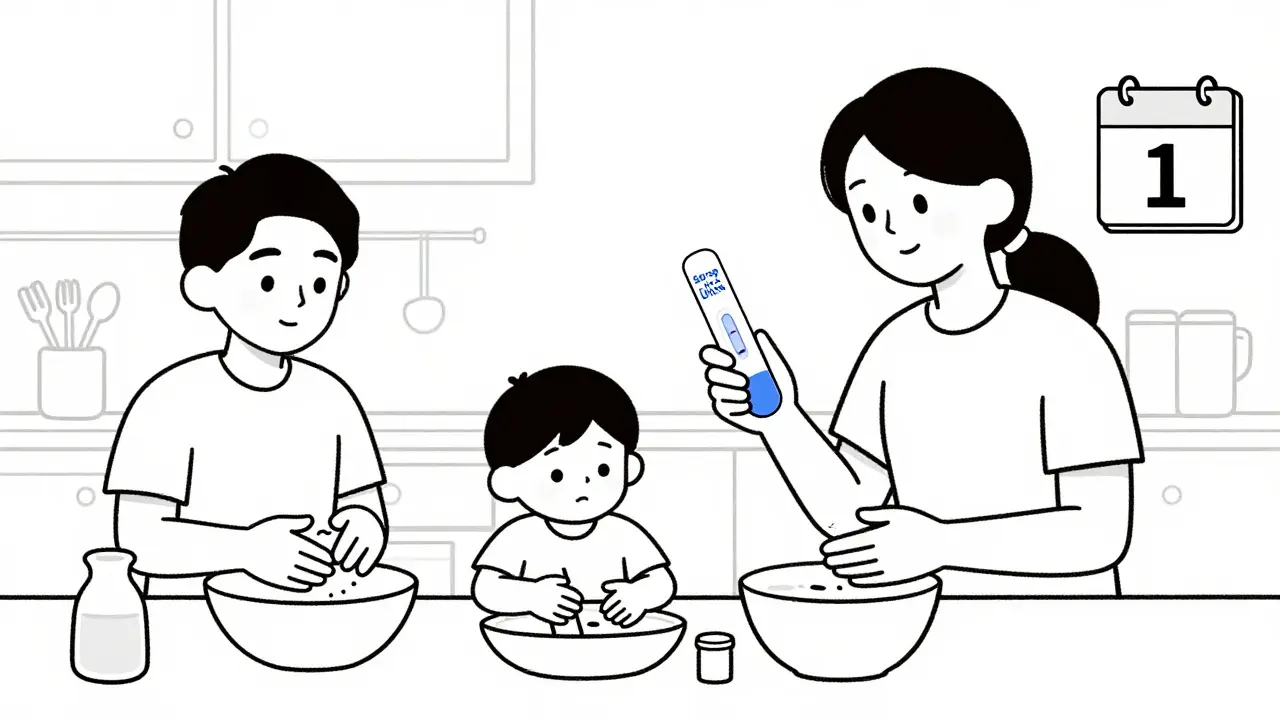
- Stay home from school or work for at least one full day after starting antibiotics.
- Don’t share utensils, cups, or toothbrushes.
- Wash hands often - especially after coughing or sneezing.
Complete recovery usually takes 7 to 10 days. Even if you feel fine after day 3 or 4, finish the full course. Skipping doses increases the risk of:
- Relapse (5-15% of cases)
- Antibiotic resistance
- Rheumatic fever (3% of untreated cases)
Some people develop complications. Peritonsillar abscess - a pus-filled pocket near the tonsil - happens in 1-2% of cases. Signs: severe one-sided throat pain, muffled voice, difficulty opening the mouth. If symptoms don’t improve after 48 hours of antibiotics, or get worse, see a doctor. Other red flags: rash, joint pain, or swelling - these could signal rheumatic fever.
Common Mistakes and Misconceptions
Many people make the same mistakes - and it’s costing us more than just time.
- Stopping antibiotics early - 40% of parents do this when symptoms improve. JAMA Pediatrics found this is the #1 reason for relapse.
- Using leftover antibiotics - 12% of adults admit to saving and reusing old prescriptions. This fuels resistance.
- Sharing antibiotics - Reddit surveys show 8% of adults have given their antibiotics to a family member. Dangerous and illegal.
- Testing everyone - The European Society of Clinical Microbiology says low-risk adults with mild symptoms don’t need testing. But the CDC disagrees. In the U.S., testing is standard for anyone with symptoms.
Also, don’t assume antibiotics work for every sore throat. Over 80% of sore throats are viral. Using antibiotics for viruses doesn’t help - and it harms everyone by making bacteria tougher to kill.
What’s New in 2026?
Just last year, the FDA approved a new rapid molecular test called Strep Ultra. It’s 98% accurate, gives results in 15 minutes, and is already being rolled out in urgent care clinics. By 2026, it could replace older rapid tests.
Researchers are also testing a 5-day antibiotic course instead of 10. Early results from a multi-center trial (NCT05678901) suggest it might work just as well - with fewer side effects and better compliance. Final results are expected mid-2025.
And while a vaccine for Group A Strep is still years away (due to over 200 different strains), the WHO has added rheumatic heart disease prevention to its global priority list. Better diagnosis and full antibiotic courses are the best tools we have right now.
Final Thoughts
Strep throat isn’t complicated, but it’s easy to mess up. The goal isn’t just to feel better - it’s to stop the spread and prevent lifelong damage. If you or your child has a sudden, severe sore throat without cough or runny nose, get tested. If it’s strep, take the full course of antibiotics. No shortcuts. No sharing. No saving leftovers.
It’s simple. It’s proven. And it works.
Can you get strep throat without a fever?
It’s rare. Fever over 100.4°F (38°C) is present in about 85% of confirmed strep cases. If you have a sore throat but no fever, it’s more likely viral. Still, some adults with mild cases might not spike a fever. If other symptoms match - no cough, swollen tonsils, tender neck lymph nodes - testing is still recommended.
Is strep throat contagious after 24 hours of antibiotics?
No. Once you’ve taken antibiotics for 24 hours and your fever is gone, you’re no longer contagious. You can return to school or work after that. But you must finish the full 10-day course to prevent relapse or complications.
Can you get strep throat twice?
Yes. Having strep once doesn’t give you immunity. You can get it again, especially if you’re exposed to someone else with the infection. Kids are more likely to get repeat cases. Good hygiene and finishing antibiotics reduce the risk.
Do home remedies help with strep throat?
Saltwater gargles, honey, and warm tea can soothe a sore throat, but they don’t kill the bacteria. Antibiotics are the only treatment that stops the infection and prevents complications. Don’t rely on remedies alone - get tested if symptoms suggest strep.
Why is penicillin still the first choice if it’s so old?
Because it’s still the most effective. Penicillin kills Group A Strep with 95% success, has minimal side effects, costs less than $4 per course, and has almost no resistance. Newer antibiotics are often more expensive, have more side effects, or are losing effectiveness due to overuse. Penicillin hasn’t been beaten.
What if my child is allergic to penicillin?
Cephalexin is the preferred alternative for most children. If they can’t take it, clindamycin or azithromycin are options. But azithromycin is less effective and resistance is rising. Always confirm the allergy with a doctor - many people think they’re allergic when they’re not. A proper allergy test can clear things up.
Can strep throat cause ear infections?
Strep throat itself doesn’t directly cause ear infections. But the same bacteria can spread to the middle ear, especially in young children. If your child has strep and then develops ear pain, fever, or tugging at the ear, see a doctor. It could be a secondary infection.
Why do some people get strep throat more often than others?
Children, especially those in daycare or school, are more exposed. Close contact, sharing items, and immature immune systems increase risk. Some people carry the bacteria without symptoms (asymptomatic carriers), which can spread it. Genetics may also play a role - certain immune responses make some people more susceptible. Good hand hygiene and avoiding close contact during outbreaks help.



14 Comments